

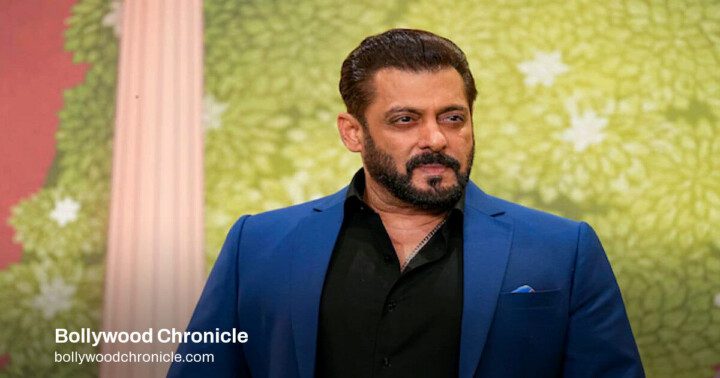
The final season of Koffee with Karan opened not with a revelation but with a deliberate retreat from one. Salman Khan took the couch for the farewell lap, and the episode’s clearest signal came early: when Karan Johar returned to Khan’s old Season 4 “virgin” declaration, Khan brushed it off as “Control, bro”. He said he now cringes at some of what he has said on the same couch before, and the rest of the hour followed his lead.
Nostalgia did the heavy lifting
The result was warm, self-aware television for viewers who actually care about Hindi cinema. Johar named Shah Rukh Khan his all-time favourite guest and wondered aloud about the film he would make with both Khans if he woke up as Shah Rukh. The episode tilted into a Salman Khan tribute, with video messages from Sanjay Dutt, Bobby Deol and Varun Dhawan, while Johar revisited Khan’s shirtless on-screen legacy.
Khan aimed his sharpest comments at paparazzi culture and paid celebrity sightings, arguing that smartphones and invasive angles had changed the relationship between stars and the public. His phrase for the shift was characteristically blunt: they had “ruined our lives”.
The hour worked on three registers at once:
- A star in archival mode: Khan reached for odd personal history rather than fresh headlines, including a supposedly haunted bedroom at Galaxy Apartments and Yash Johar’s overnight rescue during Hello Brother.
- A tribute section: Sanjay Dutt, Bobby Deol and Varun Dhawan appeared by video, and Shah Rukh Khan was a recurring reference point.
- An old-friends reunion: Karisma Kapoor’s mid-episode arrival turned the conversation toward a 36-year dynamic, from Khan making her cry on set by saying Biwi No. 1 had tanked to jokes about whether the friendship was ever purely platonic.
That shift is worth documenting beyond a single series. The same public scrutiny that made unfiltered talk commercially valuable has now trained stars to perform safety. A farewell that succeeds by refusing to chase controversy is, in effect, a farewell to the conditions that created it.
Why the farewell means more than the episode
Kapoor’s segment was not scandalous, but it was watchable because it restored the texture of a Bollywood where friendships were personal and unmanaged. That is precisely what the series once fed off, and now it is what the series can still offer only as an archive, not as news.
The absence of controversy was the opening episode’s strength and its quiet limitation. It made for affectionate television, but it also clarified why the format has hit a wall. Johar told Khan that he will be “off the grid” while Khan continues with Bigg Boss. The show is not ending for lack of star power; it is ending because the culture of reckless, unvarnished and petty conversation that powered it no longer appears in contemporary Bollywood.
Source: CNBCTV18



Comments