


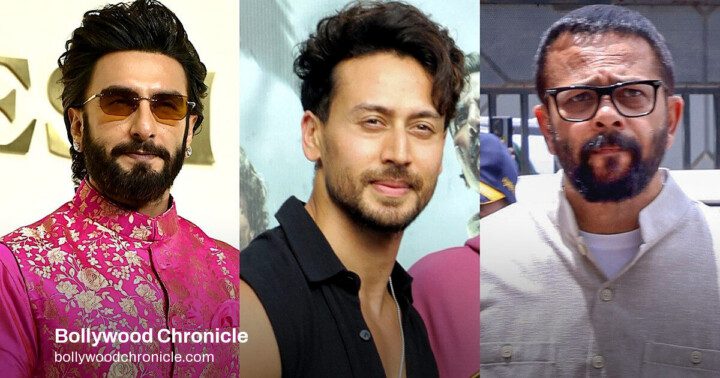
Mumbai woke on Sunday to a familiar, unwelcome headline: an actor fired upon in Juhu. Tiger Shroff was shot at and escaped unhurt. The incident, reported by Ratopati, is being read less as an isolated crime than as the latest entry in a long ledger of violence against Hindi cinema.
A present-day attack, an old pattern
The shooting follows a string of recent warnings. On 14 April 2024, two men on a motorcycle fired outside Salman Khan‘s Bandra residence; police charged six accused under MCOCA and alleged jailed gangster Lawrence Bishnoi’s direction. In September 2025, shots were fired outside the family home of actor Disha Patani in Bareilly. On 1 February 2026, gunfire hit the Juhu residence of producer Rohit Shetty; a chargesheet named 17 accused and alleged a Bishnoi-linked group sought to establish dominance, though the precise reason for choosing Shetty remained unclear.
The Tiger Shroff episode extends that sequence. It also pushes the industry’s memory back further.
The coercive decades
The Ratopati report traces the relationship between Mumbai’s underworld and Hindi cinema to the 1960s, when figures such as Haji Mastan moved among filmmakers as alternative financiers. By the late 1980s and 1990s, the relationship turned coercive. Criminal groups sought production stakes, overseas rights and casting control.
The attacks were frequent and, often, fatal:
- June 1994: Producer Javed Riaz Siddiqui murdered; a police crime branch study listed him among filmmakers targeted by criminal violence.
- July 1994: Producer Feroz Sarfaraz Khan attacked.
- 7 March 1997: Producer-director Mukesh Duggal shot dead in his Andheri office; police suspected the Chhota Rajan-Chhota Shakeel conflict.
- 31 July 1997: Director Rajiv Rai survived an attack outside his Tardeo office, with bodyguards returning fire; attackers were said to be from Abu Salem’s gang.
- 12 August 1997: T-Series founder Gulshan Kumar shot dead outside a temple in Andheri.
- 27 December 1999: Producer Manmohan Shetty survived an attempt; afterward he moved with armed guards and monitored visitors via CCTV.
- 21 January 2000: Rakesh Roshan shot outside his Santacruz office soon after Kaho Na… Pyaar Hai; he later said the underworld wanted Hrithik Roshan to act in associate-financed films.
- 14 February 2001: Actor-producer Dinesh Anand shot dead in Borivali’s National Park.
- July 2002: Director Lawrence D’Souza survived a non-targeted shooting in Oshiwara; police suspected the Ejaz Lakdawala gang wanted extortion.
What has changed
The older phase was an industrial capture: violence was a lever over money, schedules and talent. The recent incidents look different. Police accounts in the Salman Khan and Rohit Shetty cases point to gang rivalry and the projection of criminal dominance rather than a bid to finance or cast films. That does not make the threat smaller; it makes it harder to predict.
For an audience that follows Hindi cinema closely, the history is not trivia. The independence the industry won from coercive financiers was costly. Every fresh attack tests whether that boundary holds.
Source: Ratopati

Comments