

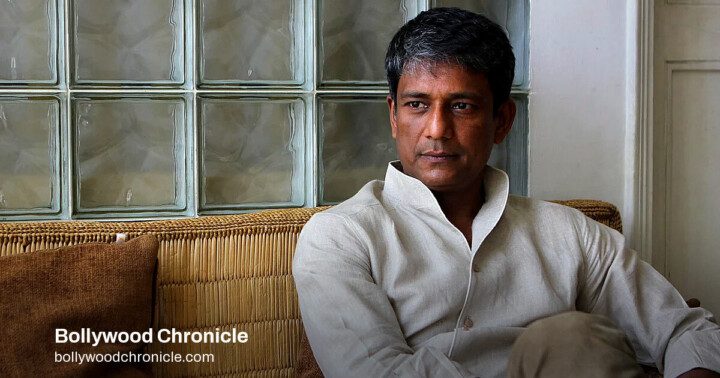
Adil Hussain has placed Hindi cinema’s treatment of women back at the centre of debate. In an interaction with Mid-Day, the actor argued that films have repeated a narrow, damaging image: women as objects of desire rather than complete human beings, and that these images do real work in shaping everyday behaviour.
Creative protest, not street protest
Asked whether actors should stay away from political questions, Hussain drew a distinction between marching with a placard and making choices on screen. “Reporting Live is my way of registering protest, not going to the street. I cannot take a placard. That’s not my job,” he said.
He was careful not to place blame entirely elsewhere. The actor said that while people point fingers at politicians or particular groups, he must also point “a tiny finger” at himself.
The screen as a teacher
Hussain’s central point is that cinema does not merely reflect society; it reinforces habits of seeing. He said audiences already witness certain behaviour towards women at home, and films have made the problem worse rather than offering a different model.
In his sharpest words, he said that women have repeatedly been portrayed as objects, not complete people:
“We have only fed them trash,” he said.
He added that women are often shown as objects of desire rather than as wholesome human beings.
What the lens normalises
The critique lands because it moves beyond individual roles and points to repetition. A single film may not cause harm; a pattern across decades of films can harden into what viewers treat as normal. This is close to what media scholars describe as cultivation: the more frequently an audience sees a particular image, the more natural it becomes.
- Films have too often made women decorative rather than central to the story.
- The responsibility is shared among filmmakers, actors, audiences and institutions.
- Protest can be embedded in the work itself, as Hussain says he is doing with Reporting Live.
Reporting Live as argument
Reporting Live, which stars Parineeti Chopra as an investigative journalist facing threats while pursuing corruption, is Hussain’s example of a story that pushes back. He frames the film as his current register of dissent rather than an abstract message.
Hussain also connected the argument to personal observation. He recalled seeing women—including his wife and women friends visiting from abroad—being stared at in public in Mumbai. His response was less about anger than about a failure of teaching: “we haven’t taught them better,” he said.
By turning the lens on filmmakers and viewers too, he makes representation a continuous creative question rather than a one-off position. Hussain said he remains optimistic, even as change moves slowly.
Source: Outlook India



Comments