

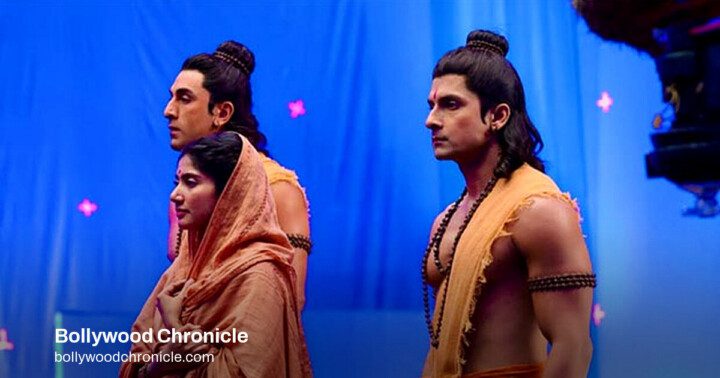
Ravie Dubey has responded to the audience reaction around Ramayana: Part 1 with a note that is less about a star turn than about being seen in a supporting role. In an Instagram post dated 15 November, ten days after the film’s 5 November worldwide release, he wrote that he woke on release morning feeling something he had forgotten — “seen” — and that the love in it “felt infinite.”
The film is still in its opening weeks, and the loudest public conversation around a project of this scale usually follows the marquee names and the box-office. Dubey’s note shifts attention to the ensemble: what it costs an actor to play a figure whose defining quality is restraint, and what it means when viewers respond to that restraint.
Duty as the centre of the performance
The note is built around Lakshman’s sense of duty. Dubey wrote that Lakshman had no ambitions for himself and was content to stand a step behind Ram and Sita, ready whenever duty called. He described that quality as “beautiful” and “noble,” and said he wanted to bring the same readiness to the work — mentally, physically and spiritually.
- He read the role as service and devotion, not personal ambition.
- He prepared to offer himself mentally, physically and spiritually.
- He thanked casting director Mukesh Chhabra, producer Namit Malhotra and director Nitesh Tiwari for the trust.
For Hindi cinema viewers, that is a familiar but often unexamined position: the devoted younger brother who holds the frame while the central story moves. Dubey’s account makes the case that the performance was found in that discipline rather than in against-the-grain reinterpretation. Lakshman has rarely been framed as a leading role in screen retellings; he is usually the shadow beside the throne, a figure of loyalty. Dubey’s message is notable because it refuses to reinterpret that shadow as ambition.
Relief as much as celebration
He also acknowledged the anxiety behind the role. He said he worried about disappointing the people who had trusted him and about whether he had done justice to Lakshman and the larger story. The audience’s response, he wrote, brought relief and joy. His closing line thanked viewers for “giving Shri Lakshman so much love,” and he ended with “Jai Shri Ram.”
That is the note’s real value for readers who track Hindi cinema closely: not a collection figure or a record, but a record of how one actor is processing the response to a mythic role. It gives the continuing run a personal footnote, and it suggests the film’s supporting performances are registering with audiences well beyond the first-day noise.
In an adaptation as closely watched as this, supporting roles carry a particular burden: audiences arrive with memory and expectation, and casting is judged against the iconography of the epic. Dubey’s note is a reminder that those choices are also felt personally by the actors, long after the cameras stop.
Source: Bollywood Hungama



Comments