

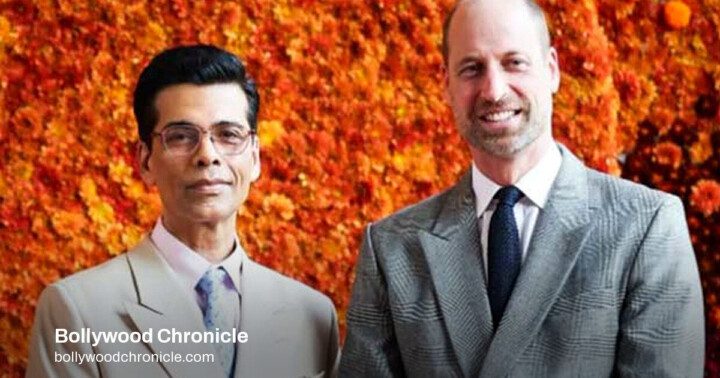
Prince William’s visit to Dharma Productions turned a Mumbai studio floor into a small piece of cultural diplomacy—and put Hindi cinema’s global ambitions on the record.
A royal audience at Dharma
On November 18, Karan Johar welcomed the Prince of Wales to Dharma Productions in Mumbai. Actors Kareena Kapoor Khan and Saif Ali Khan were also on hand. The stop was part of Prince William and Princess Catherine’s three-day India tour for the Earthshot Prize 2026.
For the royal guest, Dharma staged a performance of Shava Shava from Johar’s 2001 family drama Kabhi Khushi Kabhie Gham, danced in traditional dress. The selection tied the visit to a film that remains one of Hindi cinema’s most recognisable exports to the diaspora.
What the conversation signalled
Johar told ANI that the Prince asked how films across Indian languages have found audiences abroad. “He was gracious and kind, and spoke extensively about the potential of Indian cinema,” Johar said.
The exchange matters because it framed Indian film not as a niche interest but as a global cultural force. Across Hindi, Tamil, Telugu, Malayalam, Kannada and other languages, Indian productions now compete for worldwide attention in cinemas and on streaming platforms.
- The Earthshot Prize was founded by Prince William in 2020 to back solutions to major environmental challenges.
- Mumbai engagements included the awards ceremony on November 17 and a game of gully cricket with Sachin Tendulkar.
- The Prince also rode the Mumbai Metro and met finalists of the Earthshot Prize.
Why it matters for Hindi cinema
Royal visits are usually about state, trade or philanthropy. A stop at a production house makes cinema part of that official story. For an industry often measured by box-office numbers, the visit reframes its value: it is also a bearer of language, music and memory.
The choice of a Kabhi Khushi Kabhie Gham track is telling. The film’s scale, family theme and NRI storyline helped define a 2000s moment when Hindi films addressed global Indian audiences directly. Playing it for a visiting royal turns that heritage into soft power—a demonstration of how far the industry’s cultural reach now travels.
For readers who follow Hindi cinema closely, the more useful signal is what happens after the cameras leave. If global institutions begin treating Bollywood not as a one-off spectacle but as a regular channel to Indian and South Asian audiences, the next steps could be formal co-productions, festival partnerships or state-backed cultural exchanges.
The Earthshot connection also matters. The initiative’s focus on climate solutions gives Indian cinema a different kind of visibility: an audience beyond film fans. When a royal platform celebrates innovation and a studio simultaneously showcases a classic song, the two stories reinforce each other in the same media cycle.
The visit is not a box-office story, but it is an industry story. Recognition at this level—however brief—makes the case that Hindi cinema’s past and present are both part of its exportable identity.
Source: bollywoodHungama.com


Comments