

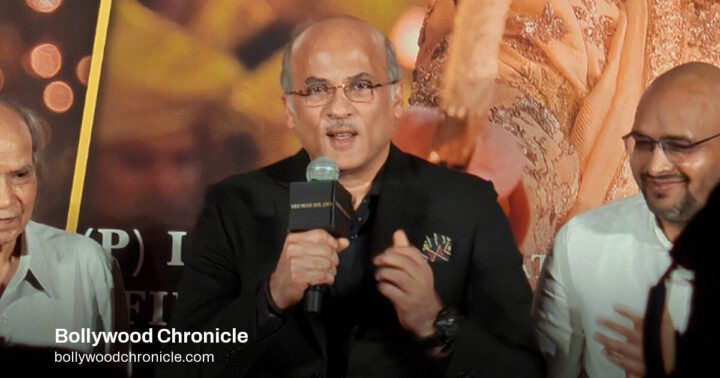
Javed Akhtar used the launch of a record-setting industry report to ask a pointed question: if the business of Indian music has never been bigger, why are its songwriters and composers still being told what to write — and why do they capture so little of the money?
The lyricist and screenwriter was speaking at the release of the Indian Performing Right Society’s EY Music Creator Report. His criticism was directed at producers and music companies that impose conditions on composers and lyricists.
“If you don’t trust a music director, then don’t take him,” Akhtar said.
Trust the talent, or do not hire it
Akhtar pointed to S.D. Burman’s scores for Chalti Ka Naam Gaadi and Sujata, where the music carried a particular style that suited each film. The principle, he argued, should be simple: if a composer is talented and trusted, give him room to compose.
He compared interference in music to a film made by five different directors, each shooting a different kind of scene. The result, he said, would be a mess.
He argued that the industry has moved away from its purpose. “The problem is the tail is wagging the dog, that should not happen,” he said.
A record year, an uneven share
The report itself shows the scale:
- India’s music creator economy generated an estimated Rs 17,400 crore in 2025, up 45% from 2023.
- Sound recording and publishing revenue reached Rs 5,433 crore, an all-time high.
- Original songs released annually rose to between 22,000 and 27,000.
Akhtar’s concern was distribution, not growth. Of roughly Rs 5,000 crore in recording and publishing revenue, he said, music directors, singers and writers receive less than Rs 1,000 crore. He described the rest of the value chain as “brokers and commission agents.”
The ‘roothna’ test
Akhtar recalled an executive telling him to remove the word “roothna” from a song because it no longer worked. He replied with four or five past hits built around the same word. When the executive held his position, Akhtar said he offered a simple exit: “Let someone else write the song, I’ll not do it.”
He framed the exchange as a symptom of a business where everyone believes they understand music and writing, even if they would not claim expertise in physics or chemistry.
Copyright, AI and a next step
Akhtar said India’s copyright law is broadly supportive, but implementation remains weak. He estimated that only about 4% of venues such as hotels, restaurants, bars and events actually pay royalties, and called for international rules as artificial intelligence makes it possible to clone voices. He cited Kishore Kumar’s voice being used widely while his family receives nothing.
He also said he and composer-singer Shankar Mahadevan will hold an event next month through Goongoonalo, their artist-owned and artist-led music platform and creative studio.
Source: The Times of India
Comments