

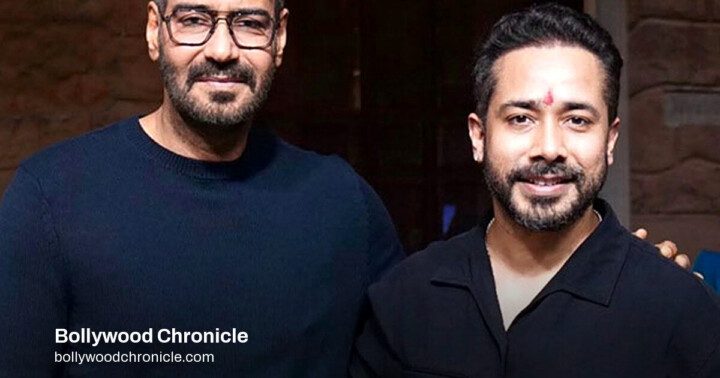
Drishyam: The Conclusion has become one of the biggest Hindi releases of 2026, crossing ₹500 crore in worldwide gross since it opened on October 2. The response that matters for franchise watchers came next: director Abhishek Pathak has made it clear that Vijay Salgaonkar’s journey is over, and there will be no fourth film.
The timing is everything. A ₹500-crore franchise is precisely what the trade expects to be extended, especially at a moment when the industry leans on recognisable titles. That is what makes the refusal notable.
The ₹500-crore question
The franchise has followed a steep upward curve. The first Drishyam, released in 2015, built a cult following on television and streaming after a modest theatrical start. Drishyam 2 arrived in 2022, when exhibition was desperate for reassurance that audiences would return, and became a significant theatrical hit. The Conclusion has now taken the commercial potential of the property to another level.
By conventional logic, this is the moment to announce a sequel. The producer already holds an asset most makers spend years trying to build: a franchise with strong audience goodwill and a proven release date. But there is a difference between a film that earns because it has a story, and a film that is made because money can be earned. That difference is the trap Drishyam is choosing to avoid.
Why the fourth film is the hard one
The strength of Drishyam has always been that Vijay Salgaonkar stays believable. He is an ordinary family man whose intelligence and understanding of cinema allow him to plan several steps ahead. The premise works because audiences understand his desperation and accept his cleverness within limits.
A fourth instalment would have to answer difficult questions: why would this family be pulled into another crisis, why would new investigators reopen the old case, and how could the same ordinary man slip away again without becoming unrecognisable? At some point, a hero who keeps escaping impossible situations stops being believable and starts being superhuman. That would erode the credibility the trilogy has spent nearly a decade building.
A simple test for any sequel
The decision offers a framework that applies beyond Drishyam. Before another chapter is announced, the test should be:
- Is there a story worth telling, independent of the previous film’s collection?
- Does the premise stay credible if it is stretched again?
- Does the audience’s connection to the character grow, or merely get used?
- Does ending now preserve the franchise better than continuing?
What the record says
Sequels carry obvious benefits: brand recognition, an easier marketing pitch, and an audience already committed to the characters. There is nothing wrong with that when the story merits it. The risk is when franchise-building becomes industrial habit, and a hit’s collection figure substitutes for a creative reason to return.
The franchise works because its hero thinks further ahead than everyone else. The filmmakers have now done the same. Ending at a peak is not a loss of potential revenue; it is often the way to keep a beloved story intact. Sometimes the best sequel is the one that is never made.
Source: bollywoodHungama.com


Comments