

Hindi cinema has always treated friction between its leading women as a story worth telling. A new look at those rivalries, from the post-independence decades to the social media age, shows how much the frame has changed: what was once a fight for a scarce top slot has become a more deliberate show of professional solidarity.
A zero-sum studio era
In the golden and masala years, the industry’s economy created the rivalry. With only a handful of heroine roles in a male-centred business, the competition was structural rather than personal. Sridevi and Jaya Prada, who shared the screen in Maqsad, are remembered for a famous frost: the two superstars reportedly declined to speak on set, and crew anecdotes describe attempts to lock them in a room for a reconciliation that produced only silence in opposite corners.
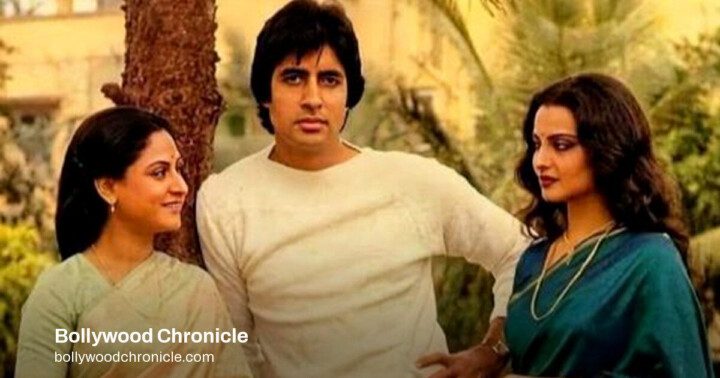
The personal and the professional also bled into each other. The Jaya Bachchan–Rekha tension of the late 1970s and early 1980s, framed around rumours involving Amitabh Bachchan, turned a box-office contest into a tabloid drama. Magazines and whispered set gossip were the distribution network; the public read the headlines, rarely the nuance.
The multiplex era turned friction into content
By the 2000s, the machinery had changed. Koffee With Karan and the celebrity interview circuit made rivalry a scheduled slot. Kareena Kapoor and Priyanka Chopra’s pointed remarks—over credentials, accents, and standing—became a defining flavour of the period. Meanwhile, shared romantic histories were used to cast Deepika Padukone and Katrina Kaif as adversaries. The catfight trope reduced performers to a simple equation: one woman’s rise, another woman’s fall.
What is different now
The digital ecosystem has not ended scrutiny; it has intensified it. On X, a missed follow, a cool glance at an awards show, or an absent birthday post can spark a fandom war within minutes. But the more meaningful shift sits underneath that noise. Contemporary stars are more likely to:
- promote one another’s releases and mark each other’s milestones publicly;
- name the industry’s structural problems, including pay disparity and ageism;
- back female-led production houses and pan-Indian projects that widen the field.
The zero-sum logic has softened. A lead actress succeeding no longer automatically closes a door for someone else, and the public conversation now has room for joint advocacy rather than solitary dominance.
Why it matters for Hindi cinema
This change mirrors a broader shift in how women’s careers are understood in the industry. The old rivalries were partly manufactured by scarcity, partly by the media, and partly by real creative friction. Creative competition will not disappear—ambition still gathers where elite talent works—but the default story is no longer one of jealousy. For readers who follow Hindi cinema closely, the more useful lens is structural: pay, roles, and decision-making power matter more than who follows whom.
That makes the next chapter worth watching. If female-led production and cross-star support continue to grow, the industry’s next generation may inherit fewer feuds and more infrastructure.
Source: The Post
Comments