

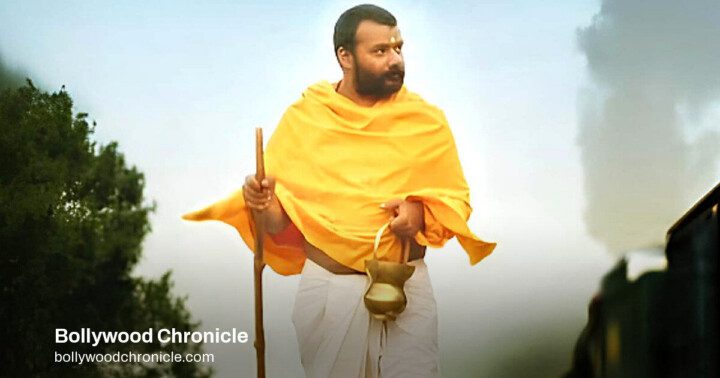
Ramayana: Rise of a Legend, Nitesh Tiwari’s two-part screen version of Valmiki’s epic, has reached theatres with Ranbir Kapoor as Lord Rama, Sai Pallavi as Sita and Yash as Ravana. But even a film of this scale has to leave some characters behind in the edit. Actor Satyen Chaturvedi has confirmed that his scenes as Sumantra were cut from the final version.
Sumantra is not a central figure in the way Rama, Sita or Ravana are, but he carries narrative weight in the source material: he is King Dasharatha’s trusted adviser and charioteer, and later finds a place in Lord Rama’s orbit. Chaturvedi shot for the role and posted production stills on Instagram alongside a note that framed the cut as an industry fact rather than a personal failure.
“Not every scene an actor shoots makes it to the final screen, and that’s part and parcel of our journey,” he wrote.
He also thanked casting director Mukesh Chhabra and closed with the line that the memories and the experience will always remain.
Why a small role matters in an epic
Sumantra may be exactly the kind of character an adaptation has to compress. He gives the Ramayana texture—loyalty, grief, duty—but he does not drive the main conflict between Rama and Ravana. For a two-part film produced by Namit Malhotra’s Prime Focus Studios with DNEG and Yash’s Monster Mind Creations, every minute has to support the central arc or build the world efficiently.
The production draws on Valmiki’s epic and other tellings, including Tulsidas’ Ramcharitmanas. That is a vast canvas, and even the decision to split the story into two parts—with a sequel planned for 2028—does not create enough room for every known character.
The lesson in how to handle a cut
For readers who follow Hindi cinema closely, the story is less about one missing scene than about how the news was delivered. Chaturvedi did not undermine the film. He named the collaborators, separated the editorial decision from his own work, and closed with gratitude.
- A cut is a structural choice. Epics must decide which threads earn screen time.
- An edit is not a review of an actor. Chaturvedi makes that distinction clearly.
- Adaptations distribute memory unevenly. Some roles live on in stills, casting notes and interviews rather than the finished film.
Context for the film’s audience
Every screen adaptation of the Ramayana has made similar choices, from television serials to feature films. The difference today is that actors can address those choices directly on their own platforms. Chaturvedi’s note models a professional response that keeps the audience’s attention on the epic instead of the edit.
With the first part now in theatres and a sequel set for 2028, the production will face more decisions about what to keep and what to leave behind. The cast and crew’s public framing of those decisions may be as important as the cuts themselves.
Source: The Times of India


Comments