

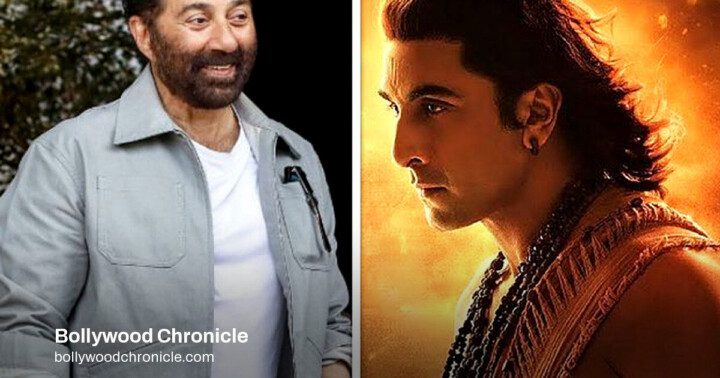
The release of the Ramayana has given Hindi cinema its biggest talking point of the week, and it arrives after the main story appears to be over. Sunny Deol’s much-discussed appearance as Lord Hanuman has been confirmed as an end-credit sequence, a placement that turns the closing minutes into a sequel announcement rather than a simple farewell. The opening on 5 November was supported publicly by Allu Arjun, who extended good wishes to Ranbir Kapoor, Yash and the team.
What the credits reveal
The sequence unspools while the credits roll, introducing Deol as Hanuman after the film’s narrative has concluded. It is a deliberate bridge to the next chapter: the first part ends not with resolution but with a promise. Trade conversations before release had already pointed this direction. In September, Bollywood Hungama reported that Deol would arrive only after the main narrative had concluded, with the goal of sending audiences out on a high.
“The idea is to leave the audience on a massive high.”
That sentiment, relayed by a source at the time, now reads as an accurate map of the film’s final minutes.
The Baahubali playbook
The structural reference is clear. The makers have looked to the ending of the first Baahubali, whose unresolved question about Kattappa and Baahubali became the engine for the second film’s anticipation. Ramayana is attempting a similar transfer: the introduction of a beloved figure at the very end is meant to reframe the credits as a trailer for what follows.
- The reveal is placed during the end credits, not in the main narrative.
- It positions Lord Hanuman as the emotional bridge to Part 2.
- The tactic mirrors the cliffhanger model used by Baahubali.
Why the placement matters
For the trade, this is not simply a casting detail. A star entry that lands after the story finishes is a mechanism for word-of-mouth: it gives audiences one final image to discuss on the way out and gives the sequel a ready-made hook. Sunny Deol’s presence is expected to be a mass-appeal moment, particularly in the Hindi belts where his stardom remains a commercial force. The decision also reflects a wider franchise grammar: an end-credit reveal can do the work of a teaser without spending a frame of the main film on a character whose real function is to promise more.
The film arrived in cinemas on 5 November after previews that had already raised expectations. With the end-credit reveal now confirmed, the conversation shifts quickly from “how does it end?” to “when does the next part begin?” That is exactly the question a franchise wants its audience to be asking.
Source: bollywoodHungama.com



Comments