

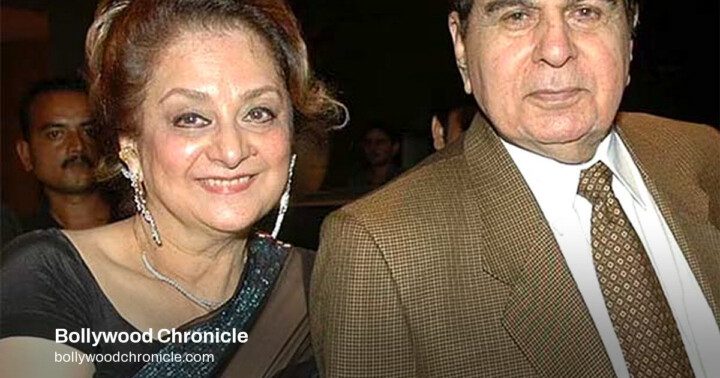
On October 11, 2026, Saira Banu returned to a date that has shaped her public and private life for decades. She marked the anniversary of her 1966 wedding to Dilip Kumar by sharing a montage and a long note on social media, telling followers that the marriage she entered as a 22-year-old had begun much earlier — as a wish she made at twelve.
A wish formed at twelve
Banu wrote that she did not know the word “manifestation” as a child, but she knew what she wanted: to become, as she put it, an integral part of Dilip Kumar’s life. The framing matters. She was not describing a crush or an ambition for the screen; she was describing a life project, one she now presents as quietly deliberate.
Even the circumstances of the wedding, she said, were extraordinary and funny in hindsight, and she still smiles at their “sheer simplicity.” That is a larger claim than nostalgia. It turns a marriage into confirmation that a child’s longing can become the scaffold of an adult life, and Banu has spent the years since Dilip Kumar’s death tending exactly that long arc in public.
October 11, 1966
The wedding itself remains the anchor of her memory. Saira Banu was 22; Dilip Kumar was 44, a twenty-year gap that the note treats not with defensiveness but with fondness. She described the day as perfect and called Dilip Kumar “the most beautiful part of my world.”
The post’s images and videos filled in what the words left open: a couple’s private moments, offered now as documents for a readership that has followed this marriage as a story for decades.
A birthday note for a Shakti co-star
The same post carried a second marker. October 11 is also Amitabh Bachchan’s birthday, and in 2026 he turned 84. Banu recalled the regard Dilip Kumar held for Bachchan, a regard he set down in his memoir Dilip Kumar: The Substance and the Shadow, and the note listed three qualities Kumar admired:
- Command over dialogue
- Impeccable diction
- The ability to listen attentively to a co-actor
She also recalled an incident from the set of Shakti, where the two actors shared the screen. Before Bachchan shot an emotionally demanding scene, Dilip Kumar asked the crew to maintain silence. For Banu, the gesture carried a principle: respecting an artist meant respecting the art itself.
What she asked readers to keep
Banu closed with a message aimed at younger generations: do not abandon love at the first sign of difficulty. “Love is not a burden,” she wrote, and in the end, after achievements, failures and lessons, “all that is left is love alone.” Her final line was both summary and testament: she has lived that life, seen the world, and is still in love.
For readers of the Hindi cinema record, the note is more than a personal post. It is an anniversary kept in the open, a widow’s archive maintained deliberately, and a small reminder that the industry’s great love stories often survive as memory before they survive as film.
Source: Bollywood Hungama



Comments