

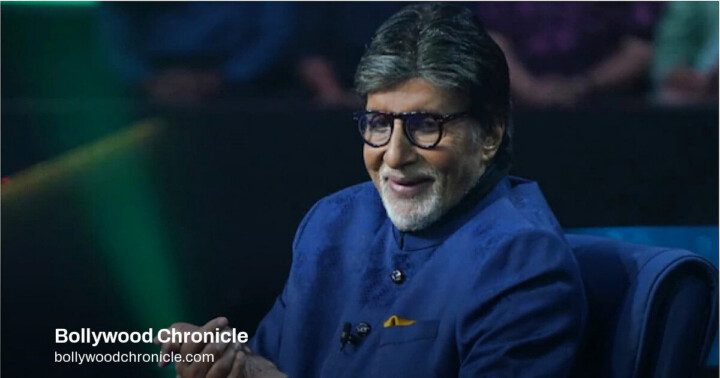
Mumbai: On a recent episode of Kaun Banega Crorepati 18, Amitabh Bachchan turned a contestant’s question about his sideburns into a short history of how rejection shaped one of Hindi cinema’s most recognisable images. The look was not a style statement, he said, but a response to what early producers told him.
What producers told the young actor
Bachchan recalled that when he began looking for film work, producers raised two objections: his height was considered too tall, and his face too small. The implication was clear—as he remembered being told, “koi heroine kaam nahi karegi,” or no heroine would work with him. To make his face look fuller on screen, he said, he grew his hair long and let his sideburns rise, a deliberate correction rather than a fashion choice.
The recollection came during an exchange with a contestant named Vinamra, whose grandfather was a film distributor. The contestant brought up the hairstyle and sideburns that became attached to Bachchan’s image during the 1970s.
From rejection to Angry Young Man
Bachchan’s early filmography underlines how long the climb took. After making his debut with Saat Hindustani in 1969, he appeared in titles such as Reshma Aur Shera, Parwana, Sanjog and Bansi Birju, many of which failed commercially. His performances in Anand (1971) and Bombay to Goa (1972) drew attention, but the decisive turn was Zanjeer in 1973.
- 1969: Debut in Saat Hindustani as poet Anwar Ali.
- 1971–72: Anand and Bombay to Goa establish him as an actor to watch.
- 1973: Zanjeer introduces the intense police officer Vijay Khanna and the Angry Young Man persona.
- Mid-to-late 1970s: A run of hits—Deewaar, Sholay, Amar Akbar Anthony, Don, Muqaddar Ka Sikandar, Trishul—cements his stardom.
Why the hair story matters
This is not simply a vanity anecdote. It records a working actor adapting to the industry’s physical gatekeeping. The features that were once cited as drawbacks—height, an unusual face—became part of the iconography of the Angry Young Man. By the time Deewaar and Sholay arrived, the same look was being copied rather than questioned.
For readers who follow Hindi cinema as a record, Bachchan’s KBC recollection is a small primary-source correction to a legend: the sideburns were born from a casting objection, not from a stylist’s brief.
Source: News18

Comments