

Jeffrey Archer, who died suddenly at his home at 86, completed his final novel, Adam and Eve, but for Hindi cinema’s record keepers he leaves a second inheritance: a blunt, decade-old accusation that Bollywood lifted his plots without permission. India was among his most enthusiastic audiences; his regard for the country did not, by his own account, extend to its film industry.
What he said in 2015
In a 2015 interview, Archer did not sound like a man seeking a quiet settlement. “These bunch of thieves have stolen several of my books without so much as a ‘by your leave’,” he said. His larger complaint was that he wanted a genuine Indian production partner, not what he described as “some second-rate Bollywood idiot” who merely claimed to be a producer.
Two films, two bestsellers
Archer did not stop at the general charge. He named two films.
- Ladies vs Ricky Bahl (2011), with Ranveer Singh and Anushka Sharma, was, he alleged, a copy of Not A Penny More, Not A Penny Less (1976). The novel tracks three swindled people plotting revenge; the film turns the victims into women conned by a charming fraudster.
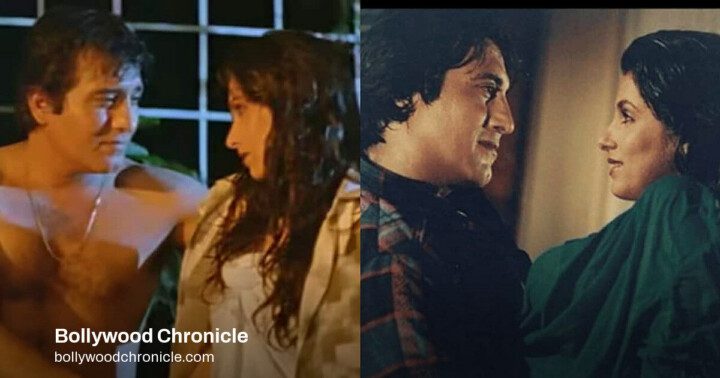
- Khudgarz (1987), directed by Rakesh Roshan, was, he insisted, lifted from Kane and Abel (1979), the story of two brothers who feud and finally reconcile.
Why the grudge belongs in the archive
The allegations were never litigated in public, so the useful question is not whether they would have won a court case. It is what they record. Hindi cinema has long worked from popular novels, sometimes as homage and sometimes as commerce, and Archer was the rare bestseller who said plainly that the books were known, the films were known, and the resemblance was not accidental. For readers who follow the industry closely, his complaint is a marker of how casually adaptation was treated before the streaming-era push for formal rights.
It is also a reminder that a film’s public memory can outlast its makers’ intentions. Khudgarz is remembered as a Rakesh Roshan hit; Ladies vs Ricky Bahl as a caper of con-artist charm. Archer’s charge adds a second, less comfortable byline to both. That is what a newspaper of record preserves: not just the complaint, but the names attached to it.
A formal ending, eventually
The story has a closing chapter. In 2025, Archer struck official deals to adapt six of his novels. That is the other lesson in the file: resentment can run for years, and the same stories can eventually move through the proper door. His Hindi cinema legacy remains the takedown, but it now sits alongside a licensed slate that was, at last, agreed with his consent.
Source: IndulgExpress


Comments