

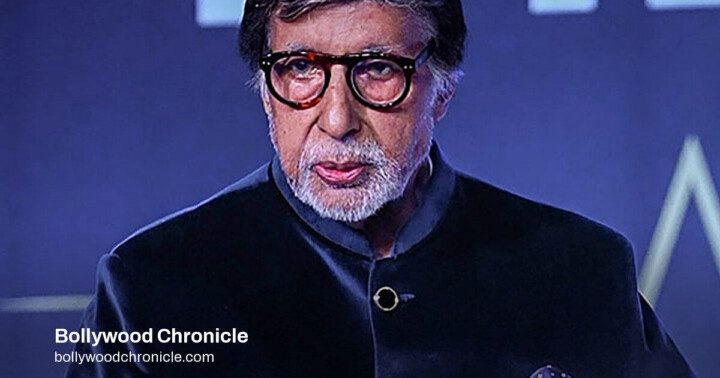
Amitabh Bachchan’s long hair and sideburns are so central to his screen image that it is easy to assume they were always part of the plan. His account on Kaun Banega Crorepati Season 18 suggests otherwise.
The recollection surfaced after contestant Vinamra, whose grandfather was a film distributor, noted how Bachchan’s hairstyle and sideburns had become synonymous with his star image. Bachchan replied that the look had a more anxious origin: early producers weighed his height and face before deciding whether he could work at all.
“No heroine would work with me” was one fear, Bachchan recalled; producers also told him his face was too small. So he grew his hair and let it reach his temples, he said, so his face would look fuller.
That small styling decision was a market calculation. The height that later made him a commanding screen presence was first treated as a matching problem with heroines. The face that would fill the frame was considered too slight.
The look was a correction, not a style choice
Hindi cinema has a habit of turning the actor’s body into a production decision. Bachchan’s memory is a precise example: the hair did not begin as fashion. It was designed to manage a producer’s fear.
The familiar timeline reads differently once that detail is in place:
- 1969: Bachchan makes his debut in Saat Hindustani.
- Early years: Some recognition follows, but work remains difficult.
- 1973: Zanjeer establishes him as the Angry Young Man.
- After: Deewaar, Sholay, Don, Amar Akbar Anthony and Muqaddar Ka Sikandar consolidate the run.
There is a wider context. Hindi cinema of the period was built around romantic pairs, and leading men were often expected to match the heroine in the frame. A tall actor with a small face seemed wrong for that grammar, so the early feedback was not purely aesthetic; it was about whether he could function in the market’s standard unit, the pair.
The exchange also shows how the quiz show format has become a place for film memory. Vinamra’s family connection to distribution opened a different kind of answer, one that a standard promotional interview might not have produced. The stories behind classic images often sit with audiences and exhibitors, not only with the actor.
Why the origin story matters
The memory is valuable because it locates stardom in negotiation. What producers identified as flaws—height, a small face—became the material of the persona. The hair that made the face look fuller also gave the emerging actor a distinctive silhouette. The fear of rejection was not erased; it was absorbed into the image.
Bachchan’s breakout with Zanjeer did more than change his career. It changed the grammar that had once excluded him, letting the same tall, intense physicality carry a new kind of hero. The long hair filled the face out; the Angry Young Man filled the screen.
When viewers rewatch Zanjeer or Deewaar, the sideburns and hair are usually read as attitude. Bachchan’s recollection suggests they were first a practical answer to Hindi cinema’s casting anxieties. That is a useful lens for film history: the most familiar symbols are often compromises that outlived their original purpose.
Source: The Hawk

Comments