

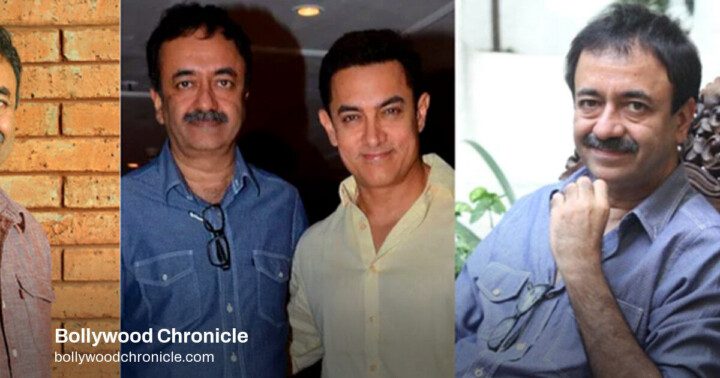
Rajkumar Hirani’s filmography can feel inevitable in hindsight: warm comedies that carry a moral without turning preachy. A new profile from IIFA traces the far less inevitable path behind that body of work.
A Nagpur beginning
Hirani was born and raised in Nagpur. His father, Suresh Hirani, had arrived in India following Partition and started a typing institute to build a stable future for the family. When the younger Hirani said he wanted a career in cinema, his father supported the choice instead of pushing him toward a safer profession.
The first attempt was brief. Hirani moved to Mumbai to attend acting school, but returned to Nagpur after just three days. That false start did not end the ambition; it redirected it.
The craft-first detour
He then joined the Film and Television Institute of India in Pune to study film editing, graduating in 1987. After that, he moved to Mumbai and began the slow work of finding a place in the industry: freelance editing assignments, followed by work with filmmaker Vidhu Vinod Chopra.
That editing background is central to understanding Hirani’s later films. His storytelling leans on rhythm, performance and emotional timing rather than spectacle alone. The years before his debut were not a pause; they were the formation of a voice.
The filmography as record
His directorial debut came in 2003 with Munna Bhai M.B.B.S., a major hit that gave Hindi cinema a new comic register. The films that followed became markers of their years:
- Lage Raho Munna Bhai and 3 Idiots turned social messages into mainstream entertainment.
- PK and Sanju showed his ability to court both scale and debate.
- Dunki extended that mix of comedy, emotion and theme.
What unites the titles is not just box office success but a consistent point of view: ordinary people, institutional pressure, and the little decencies that push back.
Why this matters for our readers
For an audience that reads Hindi cinema as a record, Hirani’s arc connects a post-Partition family’s striving to some of the most loved films of the last two decades. It also offers a useful frame for looking at directorial debuts: often the visible break arrives after a long, unglamorous apprenticeship.
The measure of his career is not only the blockbusters, but the distance travelled from a typing institute in Nagpur to the centre of the industry. That is the context worth keeping when his next film is announced.
Source: IIFA
Comments