

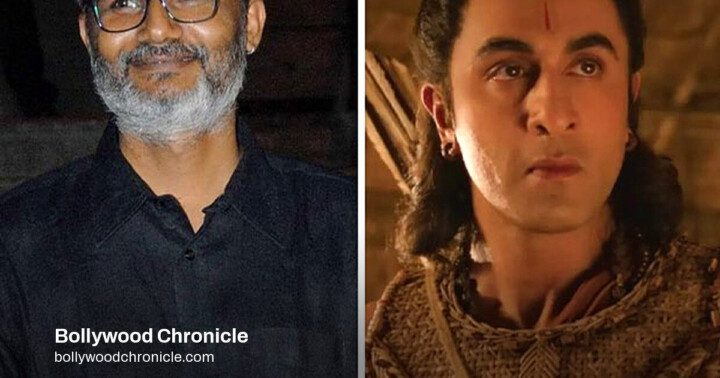
Nitesh Tiwari has offered a precise answer to the question trailing the most ambitious Hindi film of the year: what exactly is AI doing inside Ramayana: Part 1? Speaking at the film’s Los Angeles event on October 27, 2026, the director said the technology is confined to a single post-production task — synchronising lip movements with dialogue dubbed into different languages.
“It is only being used for lip sync,” Tiwari said, adding that all voices are dubbed by artists.
That wording separates lip-sync AI from voice generation, and puts the human voice at the centre of the film’s multilingual plan.
Why the distinction matters
Hindi cinema is still deciding where AI belongs in performance and post-production, and a film drawn from an ancient epic invites extra scrutiny. Tiwari’s boundary is a promise: the tool follows the actor and the voice artist; it does not replace them. That matters at a moment when synthetic voices are easier than ever to produce, and when audiences are increasingly alive to the difference.
The release plan makes the technical choice practical. The film is opening in five languages at once. If the mouth matches the Tamil or Telugu line, a dubbed version feels less like a translation and more like a native production, which is exactly what a global theatrical release needs.
The production behind the claim
- AI’s role: lip-sync alignment only, according to the director
- Voices: all dubbed dialogue performed by artists
- Release: November 5, 2026, in Hindi, Tamil, Telugu, Kannada and Malayalam
- Key cast: Ranbir Kapoor as Lord Ram, Sai Pallavi as Sita, Yash as Ravana
The adaptation, based on the epic attributed to Sage Valmiki, also stars Sunny Deol as Hanuman and Ravi Dubey as Laxman, with Arun Govil, Lara Dutta and Rakul Preet Singh in the ensemble. Namit Malhotra’s Prime Focus Studios is producing with Monster Mind Creations; DNEG is leading visual effects. A. R. Rahman has composed the music and Hans Zimmer has written the original background score.
The global frame
The Los Angeles event was not a routine press stop. The team showed exclusive footage and discussed the film’s scale and visual ambition with international media, built around a traditional Indian aesthetic. That framing positions the project as a cultural export, not only a domestic release.
For the industry, Tiwari’s sentence may become a reference line for AI disclosures. It is short enough to travel and specific enough to be checked. Until the film opens on November 5, the promise is simple: AI will move mouths — artists will supply the voice.
Source: bollywoodHungama.com
Comments