

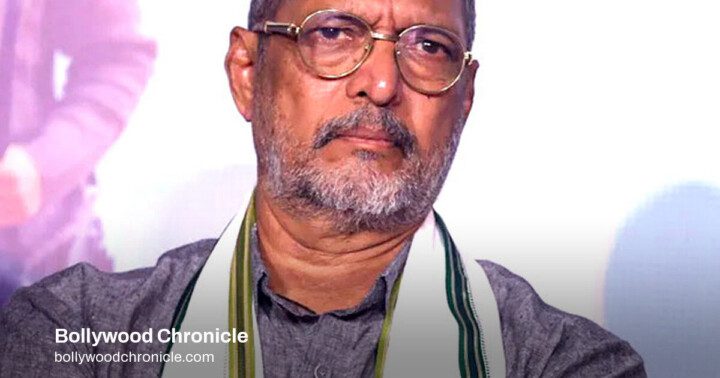
Nana Patekar died on 8 October 2026 after a sudden heart attack. The actor, known for performances in Ab Tak Chhappan and Natsamrat, leaves behind a body of work shaped by uncommon candour about how films actually get made.
That candour was on display in a 2015 group interview with Trade Guide magazine, held before the release of Ab Tak Chhappan 2. Asked if he interfered in direction, Patekar did not soften the answer. He said he interfered a great deal and, at times, scolded on set. Then, asked whether he would ever direct a feature, he went further: he was already doing it, just without the title.
“It’s just that my name doesn’t appear in the credits,” Patekar said, explaining his unofficial work behind the camera.
He added that he planned to officially direct the third film in the Ab Tak Chhappan franchise, with shoots in France and Istanbul.
A role that left nothing to prove
At the time, Patekar was working on the Marathi film Natsamrat. He described the part as so gratifying that he could have stopped acting afterward and felt no difference as an artist. That was not empty praise; he framed it as a role that asks everything from an actor and gives everything back.
The context he offered was striking. He noted that Shreeram Lagoo, the original Natsamrat on stage, was alive then—Lagoo died in 2019—but that several actors who took on the part after Lagoo had died: Satish Dubhashi, Chandrakant Gokhale, Madhusudhan Kolhatkar and Raja Gosavi. Patekar called it the most gratifying role and, at the same time, one that drains the performer.
Why he refused Kapil Sharma’s show
When asked if he would promote Ab Tak Chhappan 2 on The Kapil Sharma Show, Patekar was direct. He said he would never go to the show for a film promotion. His logic was plain: if a film needed that show to succeed, he would rather it not succeed; if it succeeded because of the show, there was no reason for him to appear. He added that he did not like comedy that relies on insulting someone to get a laugh.
- He directed many of his films unofficially, without a credit.
- He considered Natsamrat a role complete enough to end his acting career.
- He refused the promotional machinery he found demeaning.
The lack of a directing credit might sound like trivia, but for Patekar it was a position about craft rather than hierarchy. In an industry where credits shape how contribution is remembered, he described a working method in which the actor’s control was real, even if invisible. That makes his performances worth rewatching with fresh attention to scene rhythm and blocking.
It also reframes his refusal of the Kapil Sharma platform. At that time, celebrity appearances on comedy shows were a release-week ritual. Patekar’s stance was an early, high-profile dismissal of that format, grounded in his objection to insult-based humour.
For readers who follow Hindi cinema closely, the interview is a useful lens for revisiting his filmography. The authority he brought on screen often came from the same instinct he described off screen: the need to shape the scene, whether or not the credits acknowledged it.
Source: bollywoodHungama.com
Comments