

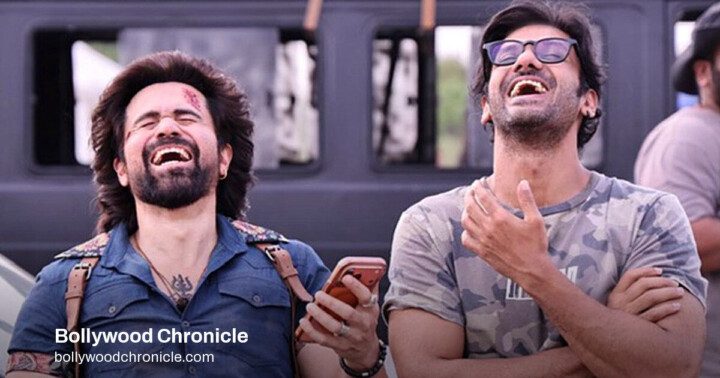
Mumbai: Five days before Gunmaaster G9 reaches cinemas, director Aditya Datt has offered his cast and crew something more personal than a standard countdown post. In an Instagram note ahead of the 27 November release, he traced a friendship with lead actor Emraan Hashmi that he says stretches back roughly 30 years.
The note is not a polished promotional letter. It names the awkward details of their early years: splitting food bills, trading secrets, and standing after the first cut of Mohit Suri’s Zeher uncertain about what the next day would bring.
A reunion older than the movie
Datt and Hashmi previously worked together on Aashiq Banaya Aapne (2005), and Gunmaaster G9 marks their return nearly two decades later. The director frames the project as a relationship milestone rather than a transactional reunion, writing that the friendship has survived “all celebrations, big or small” and that the two knew “one will always be there through it all.”
- Release: Gunmaaster G9 opens in theatres nationwide on 27 November 2026.
- Reunion: It brings Datt together with Emraan Hashmi and composer Himesh Reshammiya after Aashiq Banaya Aapne.
- Cast and producers: Genelia Deshmukh and Aparshakti Khurana star alongside Hashmi; Deepak Mukut and Hunar Mukut produce under Soham Rockstar Entertainment.
Datt also acknowledged the shoot was demanding. Recounting Hashmi’s joking complaint, he wrote that the year of filming “felt like 20 years” because of the schedule he imposed on the cast and crew.
Why a friendship note matters now
Hindi film marketing has long been comfortable with star-director reunions, but such notes usually arrive after the opening weekend. Datt has placed his before the release, treating the campaign as a documentary of shared history rather than a roll-out of plot points. The note’s value lies in its specificity: food bills, secrets, a midnight after a first cut — details that make an old association legible to a new audience. This is reunion framing: using a past association to create continuity and goodwill for a new title.
He also hands the final judgement to viewers, writing that “none of us can decide its fate from here on” and that the team can look back with pride whatever the outcome. For an audience that remembers Aashiq Banaya Aapne and Zeher, that framing may count for more than an action trailer alone.
His postscript makes the generational turn explicit: the kids who were sent into their rooms in 2005 are now adults, and in 2026 they will be telling their own children not to try the film’s stunts at home. It treats cinema as family memory as much as content.
Source: bollywoodHungama.com
Comments