


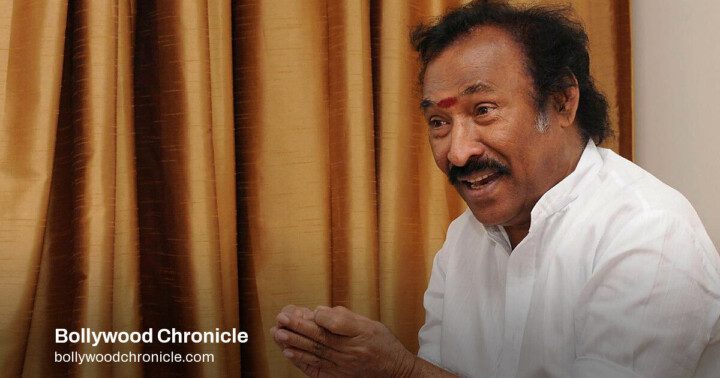
Devanesan Chokkalingam, the Tamil composer known to listeners as Deva, died in Chennai on Saturday, October 17, at 75. For an audience that follows Hindi cinema, the loss is also an invitation to revisit three Hindi tracks that carried his melodies into another language.
Three Hindi connections
- Sirf Tum (1999): The title song, from the Sanjay Kapoor and Priya Gill film, was adapted from Kaalamellam Kadhal Vaazhga, which Deva composed for the 1996 Tamil film Kadhal Kottai. Producer Boney Kapoor acquired the adaptation rights, and Nadeem-Shravan handled the Hindi soundtrack while Deva’s melody anchored the title track.
- Gham Hai Kyon (2000): The track from Hamara Dil Aapke Paas Hai, starring Anil Kapoor, Aishwarya Rai Bachchan and Sonali Bendre, was adapted from Kadhala Kadhala in Deva’s Avvai Shanmugi (1996). Sanjeev-Darshan arranged the Hindi version, but the original melody stayed intact.
- Chachi 420 (1997): For the Hindi remake of Avvai Shanmugi, Vishal Bhardwaj composed the songs, while Deva contributed the background score.
The pattern matters because Bollywood’s use of regional material is often remembered as casual or uncredited. Here, the Sirf Tum tune was formally licensed before it crossed languages. Gham Hai Kyon is an even clearer case of a song travelling on its own: Hamara Dil Aapke Paas Hai was not a remake of the Tamil film, so only the melody made the journey.
Why the originals are worth a replay
For nearly four decades, Deva was one of Tamil cinema’s most prolific composers. His death came after he was admitted to Surya hospital in Kodambakkam on Saturday morning; he had undergone a bypass surgery roughly ten years earlier and did not respond to treatment.
The useful exercise for Hindi film listeners is a simple A/B: play the Hindi hit, then the Tamil original. The comparison shows what survives a new arrangement — the hook, the rhythm, the emotional arc — and what changes with new singers and lyrics. It also makes visible the licensing decisions that let a successful melody travel cleanly.
For Bollywood Chronicle readers, the larger framework is adaptation as memory. A melody becomes a hit twice, first in Tamil and then in Hindi, and each version carries a different set of associations. Deva’s death is a chance to disentangle those layers: who wrote the tune, who licensed it, and who rearranged it for a new audience.
Source: News18

Comments