

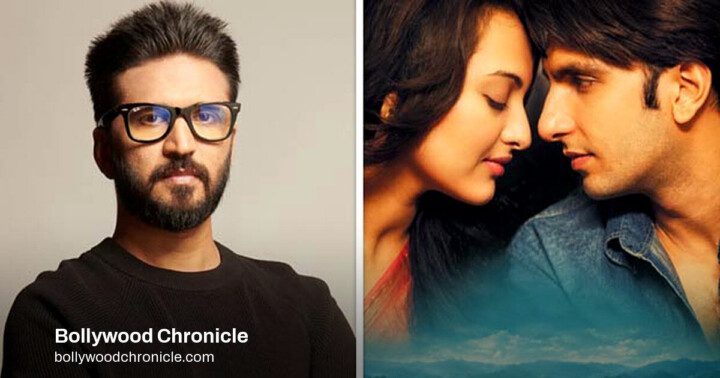
Lootera’s “Zinda” has long been heard as one of Amit Trivedi’s most aching compositions. In a new conversation with Komal Nahta, the composer said the song was never written to a brief. It began as a private response to a difficult period, and the 2013 film claimed it almost by accident.
The accident at the harmonium
Asked whether any song in his catalogue carries a deeper meaning than listeners may suspect, Trivedi named the Lootera track. He said its opening phrase — “Mujhe chod do, mere haal pe, zinda hoon yaar, kaafi hain” — was written “for a personal life situation” and “for myself.”
Work on Lootera’s music was already under way. One day, he recalled, he was “sad and distraught,” sat at the harmonium, pressed the F-sharp scale, and the phrase arrived already attached to its tune. His first reaction was surprise: where had this song come from? Because it felt right, he decided to record it.
Only later did he notice that it belonged at the film’s climax. “It was not meant for Lootera but it became a part of it,” he said.
Two ways a song can be born
- Zinda: no brief, a moment of personal distress, a spontaneous F-sharp tune, then a home in Lootera’s climax.
- Ek Main Aur Ekk Tu: a formal film brief with repeated rejections; if Shakun Batra approved, Karan Johar did not, and the other way round.
Trivedi put the contrast in career terms. Before Ek Main Aur Ekk Tu, he said, he had worked on five or six films smoothly, including “Iktara” from Wake Up Sid (2009), which he said was “one shot” — smooth all through. On the Shakun Batra project, though, his fortunes changed: every song “got bounced,” and the contradictory approvals left him confused.
Why the backstory matters
Hindi film music is usually written to match a situation, so Zinda is a useful exception. The public heard it as a climactic song; the record now notes that it was already emotionally complete before it had a scene. That helps explain why it lands like an interior monologue rather than plot punctuation.
For composers and listeners, the detail widens the conversation about craft. Not every memorable piece has to be reverse-engineered from the screenplay. Sometimes the film finds the song, and the song simply had to be true first.
Source: bollywoodHungama.com

Comments