

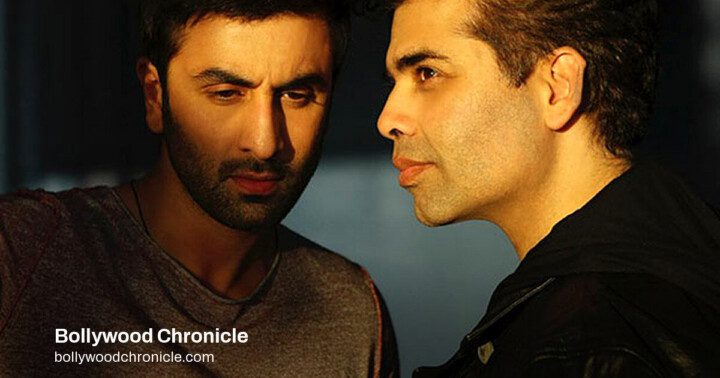
Ten years after Ae Dil Hai Mushkil released, Karan Johar has returned to the film not to revise it but to defend it. Marking the anniversary with a video montage, he described the romantic drama as “a personal story” and acknowledged that it received polarised responses, especially to its final act.
Starring Ranbir Kapoor, Anushka Sharma, Aishwarya Rai Bachchan and Fawad Khan, the 2016 film examined the strain of loving someone who does not love you back. Johar’s note placed that theme inside his own experience of longing.
A personal story, not a polished one
Johar wrote that the film was “a cumulation of many pieces of my pursuits of love and longing and perhaps also many of my own heartbreaks.” In a vulnerable phase, he said, he began to see one-sided love as a source of strength. “You don’t need to have someone love you back to empower yourself—the feeling itself is so awakening and so so powerful!” he wrote.
That shift, he added, shaped the film’s central argument: love should be selfless. “Selflessness is where true love truly resides,” he wrote.
Standing by the third act
Johar did not present the film as flawless. He admitted it “wasn’t without its flaws and had several polarised responses—especially to its third act.” But the anniversary post was notable for what it refused to do: it offered no retraction. “Truth be told I would have still told it the same way even today, with its flaws… with its perceived imperfections…” he wrote.
In an industry where audience verdicts often guide creative choices, that is a meaningful line. Johar’s standard is conviction, not consensus. “No art can be perfect and all interpretation is welcome but conviction has to trump all logic and sensibility when you want to be an unabashed story teller,” he wrote.
- The note treats one-sided love as empowering rather than purely painful.
- Johar concedes the film had flaws but says he would not change its telling.
- He thanks the cast for supporting his vision and creating the right “Vatavaran” on set.
Why the restatement matters
The anniversary post is less a retrospective than a restatement. A decade is long enough for an ending to be reassessed, but Johar is declining the opportunity. It reads as an argument that a polarised reception does not have to become a filmmaker’s regret. For readers who follow Hindi cinema closely, the note resets the conversation around the film on intention and emotional truth rather than perfection.
It also offers a framework for creators. When a deliberate choice divides the room, the response can be to explain the intent rather than quietly smooth it over. Revision is useful when the idea was unclear; it is less useful when it hollows out the point.
Johar closed with gratitude and a sign-off borrowed from the film’s soundtrack: “Accha chalta hoon… duaon mein yaad rakhna…”
Source: bollywoodHungama.com


Comments