

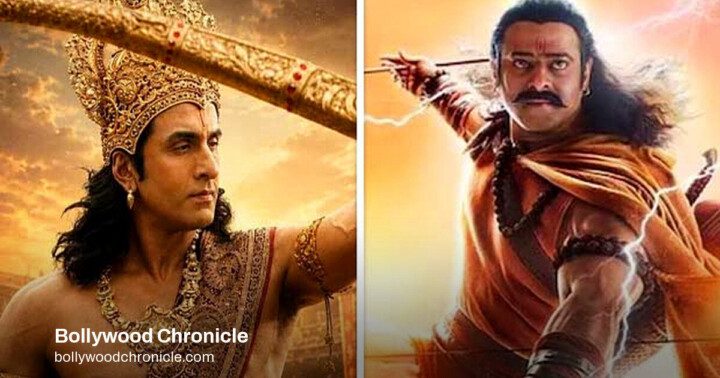
When Adipurush arrived in June 2023, the audience was never missing. Prabhas, Kriti Sanon and Saif Ali Khan led an Om Raut adaptation that drew a massive opening on the strength of the Ramayana’s familiarity. What followed became the real lesson: visual effects, dialogue and characterisation drew sustained criticism, and the theatrical run fell away after the initial rush.
Three years later, Nitesh Tiwari’s Ramayana: Part One is set for November 5, 2026, with Ranbir Kapoor as Lord Rama, Sai Pallavi as Sita and Yash as Ravana. Sunny Deol plays Hanuman and Ravie Dubey plays Lakshman. Mounted as a two-part event with Prime Focus Studios and DNEG attached, it opens with a different advantage: a public record of what went wrong the last time.
The casting is built as a contrast. Ranbir Kapoor, Sai Pallavi and Yash each bring a distinct screen image; the question is whether audiences see the characters rather than the stars. That was a central challenge for Adipurush and remains one for Ramayana.
The audience was already there
Adipurush did not fail because viewers were unfamiliar with the epic. The story is embedded in Indian culture, and the film’s opening showed how much curiosity a new version could generate. The failure was in conversion: audiences recognised the story but did not accept the treatment once it was on screen.
That distinction matters for Ramayana. The project does not need to persuade viewers to care about the Ramayana. It needs to persuade them that this version respects the material enough to sustain an emotional connection beyond the first weekend.
What the backlash clarified
The public reaction to Adipurush supplied a precise list of risks: modern dialogue that felt off, visual effects that overwhelmed the story, and characterisations that departed from what audiences expected. The makers of Ramayana have not said publicly that they changed course because of that response, but the cautionary information exists.
One useful way to read it:
- Familiarity can fill an opening weekend; only execution can fill the weeks after.
- Spectacle has to create Ayodhya and Lanka as believable worlds, not merely show scale.
- A two-part epic needs the first film to make the audience want the second.
Redemption is a real draw
There is a psychological opening here too. Disappointment with one adaptation of a beloved story can increase the desire to see that same story done properly. Viewers who left Adipurush unsatisfied may arrive for Ramayana hoping for the experience they originally wanted. That gives the new film a ready audience, but it also raises the bar.
The risk of comparison
The same history can work against the film. Audiences burned in 2023 may inspect every major asset with more scepticism. Comparisons to Adipurush are likely even where the two films differ. A merely better reception will not be enough; a project this expensive and this ambitious has to justify its own identity and the promise of a sequel.
The real marker of success, therefore, is not the opening day. It is whether the film holds through the following weeks and creates enough confidence for the second chapter. Adipurush showed the industry what viewers did not want. Ramayana‘s job is to prove what they were waiting for.
Source: bollywoodHungama.com



Comments