


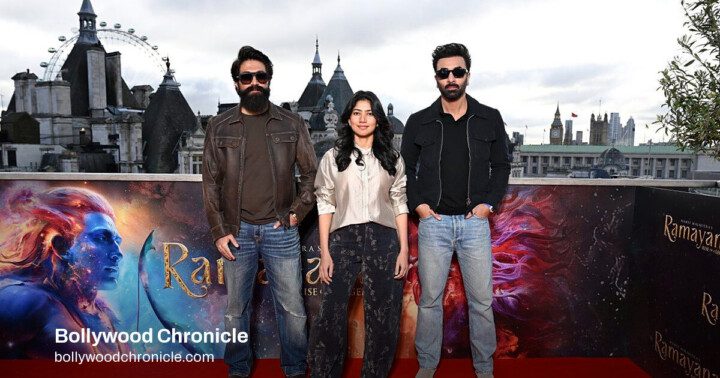
Namit Malhotra’s Ramayana reaches theatres on November 5 with a Tamil version, reviving an old question: can a major Hindi production match its Hindi-market pull in Tamil Nadu? The state has produced isolated Bollywood successes, but the track record has never settled into a steady upward line. The clearest modern benchmark is Shah Rukh Khan’s Jawan, which grossed about ₹50.32 crore in Tamil Nadu across its language versions.
A 95-year relationship built film by film
The first notable marker is Alam Ara, India’s first sound film, which reached Madras in 1931 after its March 14 Bombay premiere. That same year Kalidas, the first Tamil talkie, drew large crowds, and Tamil cinema soon built its own star system around M. G. Ramachandran, Sivaji Ganesan, Rajinikanth and Kamal Haasan. S. S. Vasan’s Chandralekha, released in Tamil and Hindi in 1948, showed how films could travel between regions, but Hindi releases remained a secondary attraction in the state.
Multiplexes widened the opening, especially in Chennai. Big films such as Dhoom 3, PK, Sultan and Dangal found audiences, but national popularity did not automatically translate into Tamil Nadu collections. Dangal’s Tamil-dubbed version collected roughly ₹35 lakh net across India on opening day, a small figure next to its Hindi business; it illustrates how little the dubbed version alone contributed early on.
Why Jawan became the exception
Jawan worked because it was not a Hindi film merely dubbed into Tamil. Director Atlee, actors Nayanthara and Vijay Sethupathi, and composer Anirudh Ravichander gave the film multiple local entry points. Distributors responded with broad access: trade reports put about 450 screens for the Tamil version in Tamil Nadu and around 100 screens, mostly multiplexes, for the Hindi version. The result was an estimated ₹50.32 crore gross in the state across languages—a strong total, but not a new floor for every Bollywood release.
- 450: Tamil-version screens in Tamil Nadu for Jawan.
- 100: Hindi-version screens, largely multiplexes.
- ₹50.32 crore: Jawan’s estimated Tamil Nadu gross across versions.
- ₹35 lakh: Dangal’s all-India opening-day Tamil dub net.
The uneven market behind the numbers
Language alone does not explain the gap. Tamil audiences regularly support Hollywood films and releases from other Indian industries, so the question is what a Hindi production offers beyond the local star system. Screen planning and tax economics add pressure. Tamil Nadu’s entertainment tax for new Tamil films was 8% in October 2017 against 15% for other Indian-language films; in 2025 the Tamil rate fell to 4% while the 15% rate stayed. That gap shapes release decisions, ticket pricing and distributor margins.
What Ramayana has to prove
Ramayana enters with a distinct advantage: the epic is woven into Tamil literary and religious memory, above all through Kamban’s Ramavataram. Sai Pallavi and Yash bring added recognition in southern markets. But familiarity is not acceptance. The Tamil dialogues, the performances and the treatment of well-known characters will decide whether the film converts built-in awareness into sustained footfall.
Ninety-five years after Alam Ara reached Madras, the Hindi-Tamil Nadu box office relationship remains a story of individual films rather than trend lines. Jawan showed what a Hindi-origin production can achieve with the right creative and distribution connections. Ramayana is testing the same market from the opposite direction—with a story audiences already know, but a new film they still have to be persuaded to see.
Source: Sacnilk

Comments