

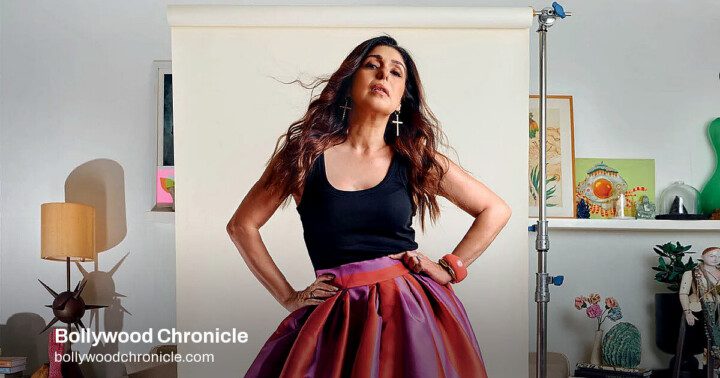
Anaita Shroff Adajania has spent much of her career at the intersection of fashion, film and popular culture. Her credits as a stylist and costume designer include Kal Ho Naa Ho, Dhoom, Love Aaj Kal, Cocktail and Call Me Bae. In a wide-ranging interview with The Hollywood Reporter India, she says the industry’s relationship with clothes has moved from a largely decorative exercise into deliberate character construction.
From holiday finds to character details
She recalls an earlier phase when actors and costume designers would pick up outfits on holiday and put them into films without deep thought beyond what looked good. Today, she says, the questions arrive earlier: who is this person, where did they come from, what would they choose for themselves?
Her method is to study personality, background, lifestyle, evolution and quirks. “We look at the character’s personality, their background, their lifestyle, their evolution, and even their little quirks,” she says. The smallest details are considered so the character feels authentic and complete. Audiences now read costume as backstory, which means clothes do narrative work before a line is spoken.
The sameness behind the glamour
Adajania is less worried about repetition than about sameness without personality. Social media has made celebrity dressing immediate and democratic, but it has also created what she calls a “conveyor belt” of looks drawn from the same moodboard and samples.
- Festivals, parties and weddings are collapsing into one overdressed category.
- Shared references can erase an individual point of view.
- The problem is not repetition but absence of personality.
Style with a reason to exist
Her influences stretch from Madonna’s rule-breaking to the unapologetic glamour of Zeenat Aman and Parveen Babi to the power looks of ’90s supermodels. When she styled Cindy Crawford for a cover, she put Crawford in a floor-length fitted gold sequin dress against Malibu’s blue sky. The image, she says, was a full-circle meeting of Indian glamour and international fashion.
Yet she sees India’s greatest fashion advantage as local. Textiles, embroidery, jewellery and regional craft are not just historical references; they are raw material for contemporary fashion. The same principle applies to cinema: the strongest costume design makes you believe that is how the character would dress in real life.
Her suggestion for the current red-carpet moment is to restore a sense of occasion. Dress for the spirit of each event, and resist turning every celebration into a wedding. As she puts it, “Not every festival or event needs to feel like a wedding.” Underneath the on-set chaos is a clear belief: the best-dressed person in the room is not necessarily the one in the latest couture, but the one who looks the most like themselves.
Source: The Hollywood Reporter India


Comments