

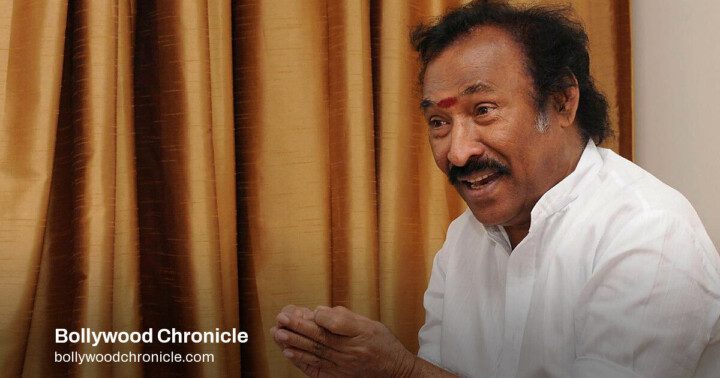
The Tamil film composer Deva, who gave Rajinikanth some of his most enduring sonic signatures, has died at 75. For readers who treat Hindi cinema as a record rather than a feed, his passing is a reason to reopen a neighbouring archive: the Tamil soundtrack of the 1990s, where the grammar of the modern mass-hero film was being written.
A third voice in a duopoly
Through the 1990s, Tamil film music looked like a two-horse race: Ilaiyaraaja as the established master and A.R. Rahman as the ascendant disruptor. Deva found room between them. After his early success with Vaigasi Poranthachu in 1989, he became prolific, and he did it with an earthy twang that set him apart. He was the first composer to carry the gaana form from the lanes of north Madras into the cinema hall.
That detail matters. Gaana was not a studio sound; it was street music, and Deva’s willingness to build film scores around it widened what a Tamil film could sound like. Other composers were also searching for identity at the same moment, but Deva’s version stuck.
The walk, the score, the aura
Deva’s most cited contribution is the elevation music he created for Rajinikanth in Annamalai and Baashha. The background score of Baashha is still discussed decades later. In one concert, he screened the scene of Rajinikanth walking down the stairs and had his orchestra play the original score live; the moment, as The Hindu’s obituary put it, was “aura-farming at its finest.”
That score’s acoustic shadow now feels innate to Rajinikanth’s stardom, and it is a template modern composers, including Anirudh Ravichander, still work within.
Melody beyond the kuthu
Deva was more than high-energy kuthu tracks. The 1995 film Aasai remains the counter-evidence:
- Konja naal — a melody that has aged gracefully.
- Meenamma — still a durable romantic standard.
- Pulveli pulveli — another track that continues to hold airwaves.
His range also stretched to comedy: he collaborated with Kamal Haasan on Avvai Shanmugi, a Tamil hat tip to Mrs. Doubtfire. He built a strong partnership with singer Hariharan through films such as Nerukku Ner and Kushi, and he delivered hits for the leading stars of his time, including Vijay and Ajith in films such as Kadhal Kottai. In Kerala, his composition Viral thottal from the 2002 Mammootty film Phantom is still hummed.
Why this matters now
Deva’s death at 75 closes a distinct era in the southern film industry. The useful move for a Hindi-cinema listener is to treat his catalogue as a source text: the elevation score, the street-born gaana groove, and the melodic counterweight all travelled into the broader Indian film vocabulary. Revisit Baashha‘s staircase scene and then Aasai‘s songs; the range between them is the clearest measure of what has been lost.
Source: The Hindu

Comments