

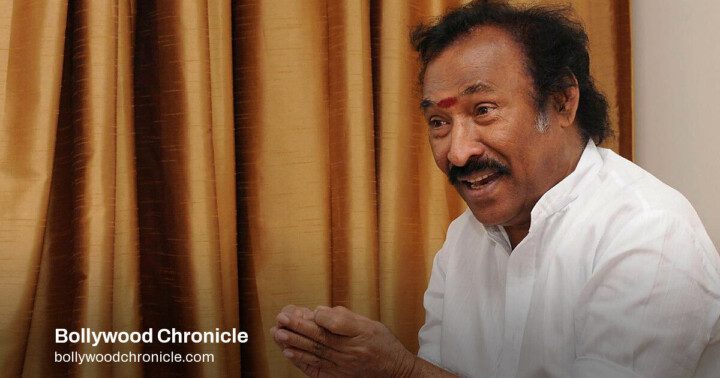
Shivaji Satam has offered one of the most personal public tributes to Nana Patekar since the actor’s death, describing a friendship of nearly forty years that shaped his career and carried his family through illness.
Speaking at Aathvanitle Nana (Nana in our memories), a prayer meeting held at the P.L. Deshpande Maharashtra Kala Academy in Mumbai’s Prabhadevi, Satam told colleagues how the veteran actor pulled him into Hindi cinema, fought producers over his pay, and rearranged a shoot so he could care for his ailing wife. Nana Patekar died of cardiac arrest on October 8 at his residence in Goa, aged 75.
A first film, pushed by a friend
Satam’s entry into Hindi films, by his telling, begins with Nana’s insistence. He said he had known Nana for close to four decades and that he could not believe the news of his death. As Satam remembered it, Nana was the one who drew him into Hindi cinema and convinced him with a simple directive: “You should do this. You must do it.”
That insistence became real with Yashwant, the film Satam identifies as his first in Hindi. When the producer offered him a police officer’s part, he declined it repeatedly. It took a call from Nana, after the producer reached out to him, for Satam to reconsider. The movie became a milestone in his career, and it also produced one of the friendship’s defining episodes.
The pay dispute
After the shoot ended, Nana asked his friend what he had been paid. When Satam told him, Nana was angry that he had accepted the amount without checking with him first. Satam asked him not to intervene; Nana called the producers anyway.
Satam recalled that Nana made the producer stand for two hours, the way a teacher might discipline a student. It was, in his account, a memorable example of Nana’s determination to see a friend treated fairly, even when that friend was reluctant to ask for more himself.
A schedule built around care
The friendship’s deeper test came during Ghulam-E-Musthafa, when Satam’s wife was diagnosed with cancer. He told Nana he would have to leave the film. Nana would not accept the withdrawal. Instead, he spoke with director Partho Ghosh and others involved in the production. The next day, Satam was told he could come at noon and leave by 8 pm, a schedule that allowed him to attend to his wife’s care.
“He did more for me than even my own brother might have,” Satam said.
Satam said the arrangement was possible only because of Nana, who “supported me like a real brother.” He described a friend who could call without warning and summon him to his farm, and whose warmth was the defining feature of the man behind the screen.
What the tributes add to the record
For readers who follow Hindi cinema’s history, these stories matter because they fill in a dimension that box-office reports never capture. The informal economy of a production set—where a senior actor’s word could alter a fee or a call sheet—was as influential as any contract. Satam’s memories describe exactly that world, and one of its most powerful figures choosing to use his clout for a friend.
Satam’s account can be read as three interventions:
- The push: Nana persuading a reluctant Satam to take Yashwant.
- The protection: Nana confronting producers over an unfair fee on his friend’s behalf.
- The care: Nana reorganising a production schedule so Satam could stay by his wife’s side.
Nana Patekar’s final full cinematic work has been identified as Shakti Shalini, directed by Aditya Sarpotdar, part of a horror-comedy universe in which he reportedly plays an occultist. But as the tributes accumulate, it is the off-screen record—the interventions, the phone calls, the rescheduled hours—that is filling in the fuller portrait of the actor.
Source: The Times of India
Comments