

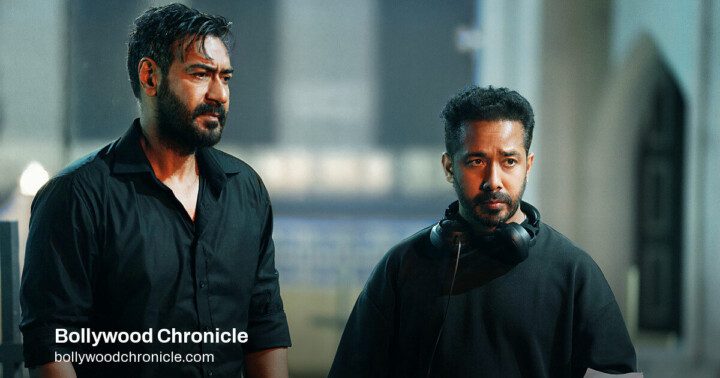
When Drishyam: The Conclusion opened on 2 October, it arrived with a decision that separates it from the two previous Hindi instalments: this time, the film is not waiting for a Malayalam blueprint. Director Abhishek Pathak says the idea to go original came after Drishyam 2, when a section of the audience was still measuring the Hindi version against Jeetu Joseph’s Malayalam films.
“The craft cannot be ignored just because it’s taken from some other material,” Pathak told The Hindu. He asked co-writers Aamil Keeyan Khan and Parveez Shaikh to develop an original story rather than adapt Drishyam 3.
Why the Hindi version stopped following the Malayalam route
By the time the Malayalam Drishyam 3 released earlier this year to mixed reviews and scrutiny of its screenplay, the Hindi team had already committed to a different ending. Pathak framed the choice as a benchmark rather than a reaction.
“There would be comparisons, and we wanted to set the benchmark with our writing and craft,” he said.
The result, as Pathak describes it, is a Bollywood spectacle built on pulpy twists and old-school heroism, with Ajay Devgn’s Vijay Salgaonkar outwitting the system to protect his family. That is also the point of departure from Mohanlal’s Georgekutty, whose Malayalam version leaned toward subdued psychological drama.
A franchise with a memetic afterlife
The Hindi Drishyam franchise has been miniaturised into memes since 2015, with the October 2 alibi among the most viral. Releasing the third part on that date is a deliberate nod to the films’ online life, Pathak said. But not every meme was planned.
He pointed to a line from actor Ajit Singh Palawat’s play-within-the-film — “Sab madeera peeke sogaye” — that became an Instagram-reel sensation. “I never thought that it would go viral like this,” he said.
Some comic beats were intentional, particularly around Kamlesh Sawant’s Gaitonde, who moves from a serious threat to a vehicle for meta-jokes. Pathak says the writers noticed that Gaitonde’s delivery was funny even without punchlines, so they wrote jokes for him deliberately.
Deception as the real subject
Beneath the twists, Pathak sees the film as a story about truth and manipulation — an allegory for a post-truth world where information can protect or damage. He says the screenplay withholds information from the viewer the same way Vijay withholds it from the police.
His craft rule is patience. He spent time with the screenplay, tested it through multiple narrations, and stopped listeners midway to ask if they could see the twist. “No one could really decipher,” he said. “That’s how we realised that the suspense was working out.”
- The Hindi third part is an original script, not a remake of Drishyam 3.
- It aims for mass theatrical entertainment rather than the Malayalam film’s psychological register.
- Its release date and dialogue choices engage the franchise’s meme culture.
Pathak is aware of online debates about logical loose ends. He says the answers are already in the film, though he has resisted replying. “I enjoy the chatter around it, whether it is negative or positive.”
For an industry still negotiating the line between remake and original, Drishyam: The Conclusion offers a useful case: take a familiar franchise, keep its emotional core, and let the Hindi version build its own ending.
Source: The Hindu

Comments