
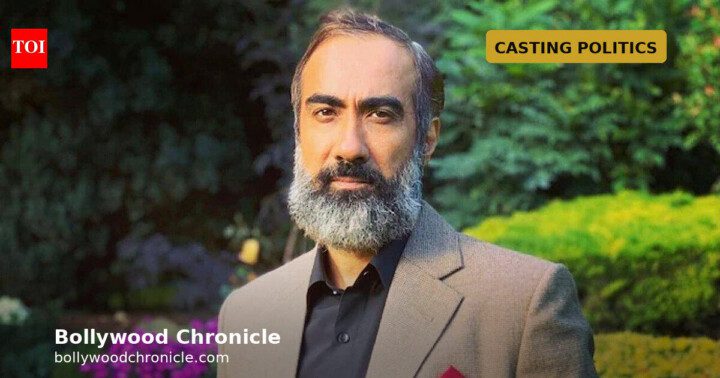
Mumbai: Ranvir Shorey has said he finally received confirmation of something he had long suspected: a major mainstream studio chose not to cast him because his public image was seen as a liability.
In a post on X, the actor wrote that a source he trusts confirmed the decision. Shorey said the studio described him as “anti-govt”, “too vocal” and “potentially controversial”.
When a user urged him to name the studio, he declined. “Nah, nothing to ‘expose’. They’re exercising their choices,” he replied, adding that he posted so the studio would know that he knows.
Why the moment lands
Shorey has often been outspoken on social media, and his posts have drawn both support and criticism. Recently he faced backlash after an exchange with a social media user who criticised a viral reel featuring the cast of Khosla Ka Ghosla 2. That history matters: it shows why a studio might now view him as a casting risk, even while his work has a loyal following.
What makes the revelation notable is not one rejection but the public naming of private logic. Hindi cinema has long weighed an actor’s off-screen presence as part of a film’s commercial risk. Shorey’s decision to post is less an accusation than an acknowledgment.
The details
- The claim: A big-banner studio passed on him over labels tied to his political image.
- His response: He refused to name the studio and said there is “nothing to expose.”
- The advice: “The world is a soul crushing place, my friends. You have to be your own light.”
Why the timing matters
The statement arrives while Shorey is preparing for Khosla Ka Ghosla 2, the sequel to his best-known film. That contrast—between a cult classic built on ensemble and an industry that may now see him as a risk—makes the post land differently. It is one thing to lose out at the start of a career; it is another to learn the reason after years of visible work.
The signal for talent
For actors, the post is a reminder that the boundary between performance and persona has blurred. A film’s audience is no longer counted only in cinemas; it is an online constituency that can be mobilised or alienated before a trailer drops. When a studio uses the phrase “potentially controversial”, it is not making a political statement—it is making a distribution calculation.
Shorey’s reply to the suggestion that he should “expose” the studio is instructive. He calls the decision an exercise of choice, not a conspiracy. The distinction matters: an industry can be risk-averse without being coordinated.
What he has next
Khosla Ka Ghosla 2 is directed by Prashant Bhagia and reunites Shorey with Anupam Kher, Boman Irani and Parvin Dabas. He was also seen in the Prime Video series The Pyramid Scheme as Manoj Shrivastav.
The episode is likely to keep a longer conversation alive: whether Hindi film institutions reward silence, and whether actors can express themselves publicly without being treated as liabilities. What Shorey has asked for, in effect, is not revenge but recognition.
Source: The Times of India
Comments