

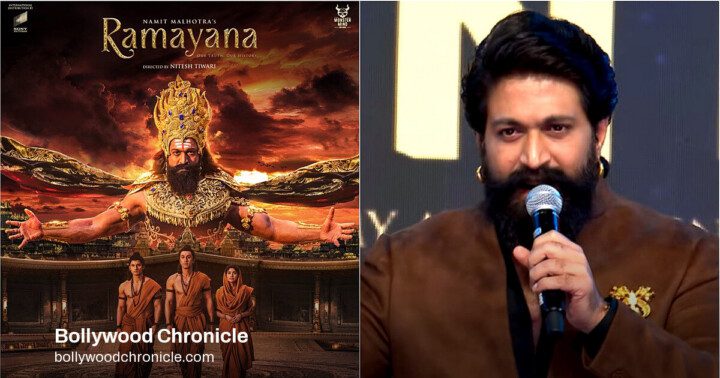
At a pre-launch event in Hyderabad, Yash explained what persuaded him to join Ramayana not only as an actor but as a co-producer. The answer, he said, lay in a conversation in Los Angeles with producer Namit Malhotra, whose ambition for Indian cinema made the decision feel larger than a single role.
The pitch that brought Yash aboard
Yash recalled Malhotra describing where he wanted the Indian film industry to sit globally. He remembered the producer saying, “I want our industry to be placed at that level. That is the day I’ll be happy.”
For Yash, that vision justified a producing stake. Ramayana is produced by Namit Malhotra’s Prime Focus Studios in collaboration with Yash’s Monster Mind Creations. It is directed by Nitesh Tiwari.
Five industries, one request
Yash then made a direct appeal to fans across India’s language industries. He named them one by one: Telugu, Kannada, Tamil, Malayalam and Hindi. His request was conditional: if audiences like the film, they should come together and show the world what Indian cinema can do.
“This Ramayana is in all our blood. So, when making this film, this is not a work that can happen from just any one film industry. The entire Indian film industry must come together.”
Why the framing matters
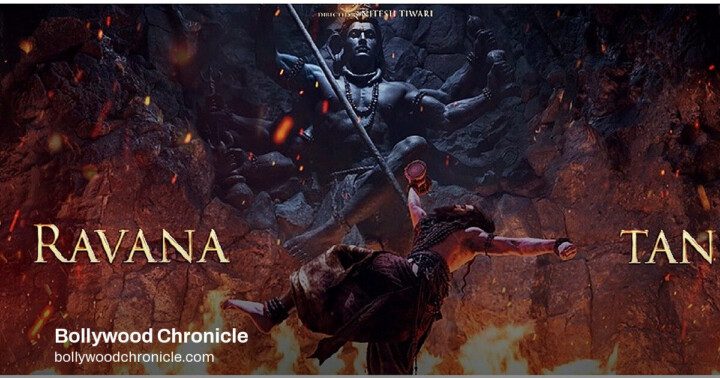
Ramayana is being positioned less as a single-language release than as a shared cultural asset. That changes what success means for Hindi cinema audiences. A film that draws viewers from several industries at once becomes a test of whether Indian epics can compete as global events.
- Release: Ramayana: Part One opens worldwide on 5 November 2026
- Production: Prime Focus Studios and Monster Mind Creations
- Cast: Yash, Ranbir Kapoor, Sai Pallavi, Ravi Dubey and Rakul Preet Singh
- Yash’s request: support from all five language industries if the film is liked
Co-productions of this scale are not new, but the structure here matters. A star-led company and an established studio are sharing risk as well as credit on a project with enormous cultural expectations. That gives Yash a visible stake beyond his performance.
Yash also argued that India should take the initiative to tell its own stories rather than wait for others to do so. His framing is as much about cultural authority as it is about box office. In recent appearances he has described the epic as transcending any single film industry, and Hyderabad extended that idea into a practical invitation to audiences.
The question now is whether that invitation translates into viewers seeing Ramayana as their own story rather than one industry’s export. As the worldwide release approaches, the film becomes a useful case study in whether a mythological epic can be scaled as a pan-India cultural event.
Source: News18
Comments