

The opening number, and why it is not a verdict
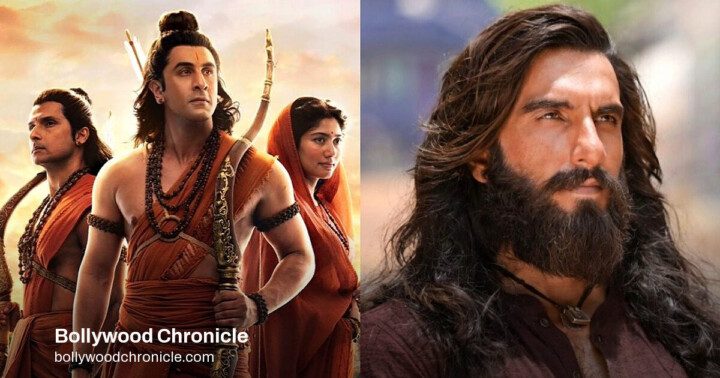
Nitesh Tiwari’s Ramayana collected ₹5.44 crore gross, including block seats, in roughly its first 24 hours of advance booking for the 5 November release, according to Sacnilk. That puts it more than 84% behind Ranveer Singh’s Dhurandhar: The Revenge, which crossed ₹10 crore in its corresponding booking window.
The comparison needs context. Dhurandhar: The Revenge opened bookings alongside its trailer and placed paid previews on sale first, so its early sales were drawn from high-priced premiere shows for a sequel that had already grossed around ₹1,300 crore worldwide. Ramayana’s first day covers regular opening-day shows, with a 16-day window still ahead. Paid previews are reportedly planned for 4 November — around 300 shows in reports — but the makers have not confirmed them and those bookings have not opened.
Where the early gross is actually coming from
The more instructive signal is the composition of demand. DNEG confirmed in July 2025 that the two-part adaptation was filmed for IMAX, with visual effects handled by DNEG and ReDefine. That promise of large-format spectacle is showing up in early sales.
By the morning of 22 October, premium formats — IMAX, 4DX, Dolby and other specialised screens — accounted for approximately 30% of advance gross despite representing only a small fraction of total shows. At Mumbai’s PVR Phoenix Palladium, an IMAX screening reportedly sold out at ₹2,770 a ticket, and premium recliner seats at another Mumbai cinema were listed at ₹3,170.
The film is being sold as a theatrical event with a reason to choose costlier formats, not merely an upgraded seat. Early evidence suggests a section of the audience is willing to pay that premium.
A divided map of demand
Geographically, the opening day is uneven. Delhi-NCR and Mumbai lead in revenue because of larger multiplex networks, more opening-day shows and premium ticket pricing. Hyderabad and Bengaluru are reporting higher occupancy against far fewer screenings, pointing to pockets of concentrated demand outside the core Hindi markets.
Karnataka is the clearest example. Yash’s presence as Ravana gives the film recognition among Kannada audiences, but Bengaluru alone accounts for about 78% of the Kannada version’s advance gross. Telugu screenings remain limited, so their early contribution is not yet a reliable measure of demand across Andhra Pradesh and Telangana.
At the 21 October afternoon checkpoint, Hindi represented approximately 95% of domestic advance gross, while Kannada contributed around ₹28 lakh. The film is planned as a multi-language release on 5 November, with Sri Venkateswara Creations handling Andhra Pradesh and Telangana distribution.
What to watch next
- Paid preview confirmation and their ticket sales will make the Dhurandhar comparison more like-for-like.
- Premium-screen occupancy needs to hold beyond the first-day surge for the format bet to pay off commercially.
- Southern-language availability will show whether early occupancy in Bengaluru and Hyderabad is a film-level trend or a supply-side effect.
For now, the ₹5.44 crore headline is an early measurement of a long campaign, not a final verdict. The real test is whether spectacular-format demand spreads wider once regular audiences begin booking.
Source: Sacnilk Technologies Pvt. Ltd.
Comments