

For years, Hindi cinema’s playback establishment and India’s independent musicians operated as parallel economies. The voices were famous; the indie scene was deliberate about staying outside the film machinery. That separation is now thinning, and the best evidence is in the release calendar.
The collaborations
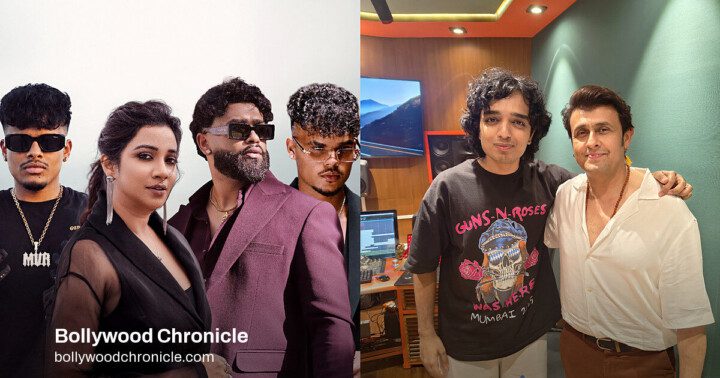
- “Kalyani”: Shreya Ghoshal joins ARJN, FIFTY4, KDS and RONN on a Malayalam indie hit that had already crossed tens of millions of Spotify streams before her remix.
- “Iss Tarah”: Sonu Nigam steps into Chaar Diwaari’s world, a setting that does not require the song to serve a screenplay.
- “Chinta Nahi”: Kumar Sanu appears alongside Frappe Ash and Wheatish Brown, placing a voice synonymous with 1990s Hindi film music inside contemporary hip-hop.
King’s album Raja Hindustani extends the pattern, drawing on Sunidhi Chauhan, Shreya Ghoshal, Shaan, Kumar Sanu and Rekha Bhardwaj. None of these are framed as rescue missions. They are exchanges with something to offer both sides.
A streaming shift, not just a sound shift
Spotify’s 2025 year-end data, cited in the Rolling Stone India essay, found that I-Pop — popular Indian music released outside film soundtracks — accounted for half of India’s Top 10 tracks. Anuv Jain, Jasleen Royal, Aditya Rikhari, Faheem Abdullah and Kushagra charted alongside film favourites. The data confirms what the collaborations suggest: a song no longer needs a film, a superstar or a cinematic moment to enter the national conversation.
Arijit Singh’s decision to stop accepting new playback assignments is perhaps the clearest sign. Amaal Mallik has also argued that artists should pursue the work they actually want to make rather than simply accepting what the industry offers. The centre of gravity is moving.
Legacy voices in unfamiliar rooms
The “Kalyani” remix matters because the original did the groundwork. It built momentum through word of mouth, social media and dance reels before Ghoshal joined. Her version, released in July 2026, pushed the song further on the Indian and UAE charts, and she used the track while announcing her Unstoppable tour. The track’s identity did not get diluted; it gained a second audience.
Frappe Ash, speaking about his forthcoming album M.I.L.F (Man I Love Frappe), described pulling Kumar Sanu into a song he had imagined rather than simply honouring a legend:
“My dad and I grew up listening to Kumar Sanu ji and Udit Narayan ji. It was a dream come true to write a song and guide sir to hit the notes the way I imagined it. His voice has this jawaani in it, a playfulness, that immediately changed the energy of the studio.”
King found a different lesson in his collaborations with playback veterans. He told Rolling Stone India that working with artists who had such distinctive ways of loving their craft made him trust his own approach: “If all these legendary artists have such distinctive ways of working, I should trust that what I’m doing is my own thing, and that it’s correct.”
The live circuit follows
A.R. Rahman’s Wonderment tour, Sunidhi Chauhan’s I Am Home tour and Shreya Ghoshal’s Unstoppable tour are built around the artist’s own catalogue, not the old arrangement of lending a voice to a film and leaving the performance to a lip-syncing actor. Arijit Singh’s upcoming tour points the same way. Nostalgia is doing some work, but it is being used as raw material rather than rerun.
Source: Rolling Stone India
Comments