

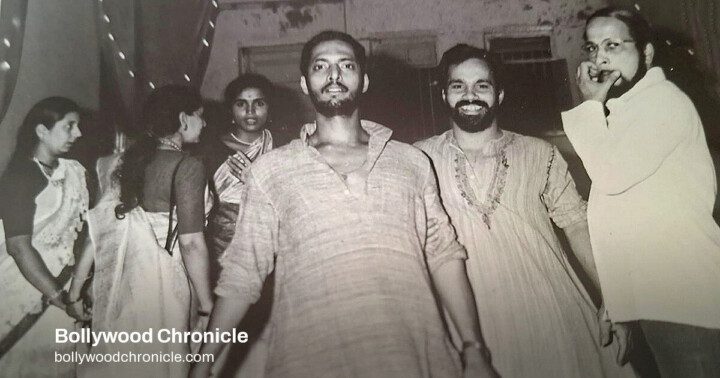
The sudden death of Nana Patekar has brought a wave of tributes, but few carry the intimate detail of Shrabani Deodhar’s remembrance, shared with Rediff.com Senior Contributor Roshmila Bhattacharya. The National Award-winning director met him when she was 17 on the set of the 1981 Marathi film Nagin. He played her father-in-law; off camera, he became the older brother she had not expected.
A friendship built before stardom
Deodhar’s memories begin at a railway crossing on the way to the Nagin shoot. Recognising that both cars belonged to the same production, Patekar introduced himself. On set, she recalled, he kept the boys away and looked out for her. When she and cinematographer Debu Deodhar decided to marry, Patekar carried Debu on his shoulders and danced from Mahim to Dadar.
At the wedding, he kept demanding “ek tamasha” – one crisis to make the festivities livelier. When Shrabani’s sari pallu caught fire, he panicked. The affection extended into domestic life: while Debu was away on a shoot and Shrabani was pregnant, Patekar came home to cook khichdi for her.
The values his mother passed on
Deodhar credits Patekar’s mother, Nirmala, for keeping him grounded. A strong, God-fearing woman, she raised three sons on modest means and was, by Deodhar’s account, a wonderful cook. Patekar inherited that skill and loved feeding people.
- Grounded appetite: At the family’s Ganpati puja, the driver was fed with as much care as Anil Kapoor and Rishi Kapoor.
- Generosity: Before one Ganpati, Debu and Shrabani handed over their saved Rs 1,000 for Patekar’s puja, cancelling a trip to Pune.
- Lasting influence: Nirmala lived till 99, and Shrabani says it was her upbringing that kept success from going to Patekar’s head.
Exacting on set, tender off it
During Prahaar: The Final Attack, Patekar’s directorial debut, Shrabani was in charge of production. Patekar had trained at the Maratha Light Infantry Regimental Centre in Belagavi and would demonstrate scenes himself, however physically demanding. On the 1986 film Sutradhar, where Shrabani began as an unpaid third assistant, she twice bore his fury for continuity mix-ups. After one episode, she recalled, he drove to Kolhapur himself to buy replacement glasses, then hugged her and explained that the scolding was training so other stars would not shake her.
When her first feature, Lapandav, won the National Film Award for Best Marathi Feature Film, Patekar was ecstatic. He proudly told everyone that his sister had won a National Award.
Rift, apology and an unfinished project
The friendship was tested when she was to direct Billa No 302, based on a story Patekar had written. Both eventually agreed to call the project off. Around two years ago, Deodhar says, he called her to his Mumbai flat and apologised for the differences; she apologised too for what she calls her own childishness. He invited her to his Pune farm for Ganpati, but her granddaughter’s exams kept them away.
Four days before the end, she had narrated a script to him. He told her that once he returned from Goa, he would take the project forward. She remembers a line from Thodasa Roomani Ho Jayen in which his character promises to arrive when hope dries and dreams wither. To her, Patekar was “a shower in a drought.”
Source: Rediff.com



Comments