

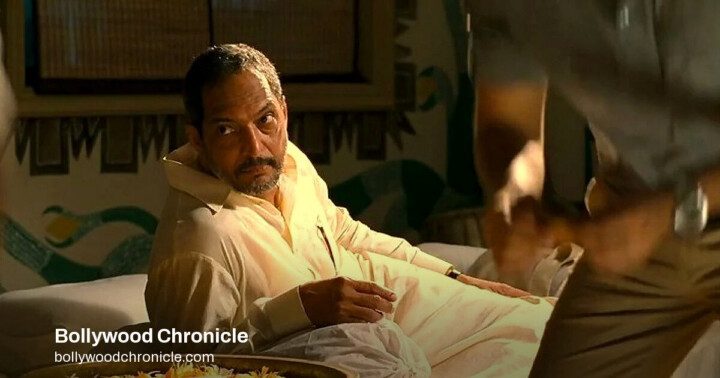
Nana Patekar, the actor whose Parinda don Anna jolted Hindi cinema out of its lazy villain-writing, died on Thursday morning, October 8, 2026. His death closes a screen career that ran nearly five decades, from Muzaffar Ali’s Gaman (1978) and Mira Nair’s Salaam Bombay! (1988) to Vishal Bhardwaj’s O’Romeo (2026), his final appearance.
Before Patekar, mainstream Hindi cinema was built around the hero. The romantic lead got the songs, the action and the attention; the villain, the friend and the father were support acts. Patekar refused that arrangement. Once he entered a frame, the hero could become the sidekick.
Anna reset the villain template
When Parinda released on November 9, 1989, audiences had not seen a mainstream don like Anna Seth. He could quietly feed pigeons and then explode into violence. The character was damaged, paranoid and deeply human, which made him far more frightening than the predictable potboiler villains of the time. Vidhu Vinod Chopra directed, but audiences came back for Patekar.
That performance did not just launch a star; it changed the writing. Bollywood’s comical, lazy villains started to look outdated because one actor had shown what an unpredictable character could do.
The roles that followed
Patekar kept choosing parts that were hard to classify:
- Prahaar: The Final Attack (1991): Major Pratap Chauhan, an uncompromising commando trained with the Maratha Light Infantry for physical realism.
- Agni Sakshi (1996): an abusive, obsessive husband whose menace came from trauma, not cardboard evil.
- Ab Tak Chhappan (2004): encounter specialist Sadhu Agashe, cold, clinical and stripped of cop-hero melodrama.
- Natsamrat (2016): Ganpatrao Belwalkar, an ageing theatre actor broken by family betrayal.
None were conventional heroes. Yet audiences wanted more, and he made the character the main event.
A voice, a silence, and a meme legacy
Patekar’s dialogue delivery was different. He spoke quietly, paused uncomfortably, muttered to himself, then erupted. His silences could be more threatening than anger. That is why lines from Yeshwant (1997) and the ‘Control, Uday, Control’ catchphrase from Welcome (2007) still circulate. Younger viewers know him through memes and Reels, much as a previous generation knew him from monologues such as the anti-establishment speech in Krantiveer (1994).
He also showed range without his voice. In Khamoshi: The Musical (1996), as a deaf-mute father, he carried the role through face and gesture. In Natsamrat, the line ‘Kuni ghar deta ka ghar?’ became a devastating moment.
Why he still matters
Manoj Bajpayee and other actors have noted that non-hero performers were once treated almost like second-class citizens. Patekar changed that perception through sheer screen presence. Long before OTT made morally grey, psychologically fractured men fashionable, he was playing them in mainstream Hindi cinema. His legacy is not just a set of performances; it is the idea that the most interesting person in the frame does not have to be the man getting the girl.
Source: The Times of India
Comments