

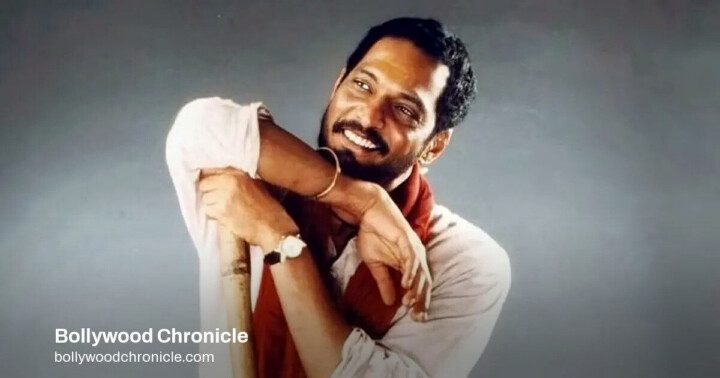
Nana Patekar, the actor whose raw intensity and unscripted pauses turned Hindi film dialogue into something closer to street speech than stage recitation, has died at 75. He suffered a cardiac arrest at his home in Goa. Dr Shekhar Salkar said Patekar’s condition worsened around 2:30 am, and attempts to revive him with CPR continued for about 45 minutes without success.
By morning, tributes had begun to note the same quality: Patekar was a rare actor who spoke with equal bluntness about social issues off screen. Prime ministers and industry colleagues were among those who remembered a voice that never softened for convenience.
A style built on rhythm, not recitation
Patekar had been a presence in Hindi cinema since his debut in Gaman in 1978, a career of nearly five decades. What set him apart was not the size of a role but the texture of his speech. He stripped away the polish of earlier theatrical delivery and replaced it with the halting, repeated, half-swallowed patterns of real anger. A tribute in Jagranjosh put it concisely: he “lived them with realistic pauses that felt entirely unscripted.”
His National School of Drama training and the discipline he carried from his time as a marksman translated into an unusual precision. The pauses were never accidental; they were choices.
Five lines that trace the legacy
- Krantiveer (1994): The gallows speech, delivered in a single four-minute take without a teleprompter, according to director Mehul Kumar.
- Krantiveer (1994): The “Hindu ka khoon, Musalman ka khoon” line became an audio recording used by activist groups at peace demonstrations in the late nineties.
- Yashwant (1997): The mosquito line, improvised by Patekar during rehearsal from a more formal written speech.
- Yashwant (1997): The “sau me se assi beiman” satire resurfaced on banners and memes during corruption protests in the early 2010s.
- Tirangaa (1993): The Maratha line, delivered opposite Raaj Kumar, whose banter with Patekar became a box-office asset.
Why the silences mattered
Hindi film monologues had often been written for elevation, with actors rising to a rhetorical pitch. Patekar’s innovation was to bring the monologue down to eye level. He treated dialogue as thought made audible, full of false starts and sudden emphasis. That is why his lines travelled beyond the theatre: they were easy to chant, sample, and set on a protest banner.
For contemporary actors and writers, the work remains a usable archive. A scene is not only what is said; it is where the speaker stops, repeats, and refuses to finish. Patekar’s legacy is in those gaps.
Source: Jagranjosh.com
Comments