

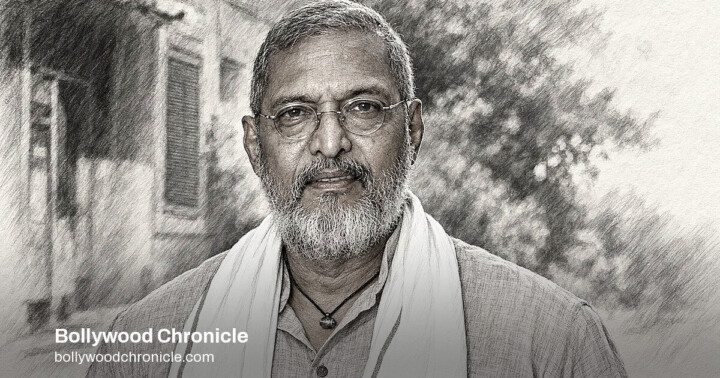
Nana Patekar, the actor whose delivery could turn an ordinary line into a warning, died at 5.20 am on 8 October after a cardiac arrest at his residence. He was 75. Attempts at CPR continued for 45 minutes without success.
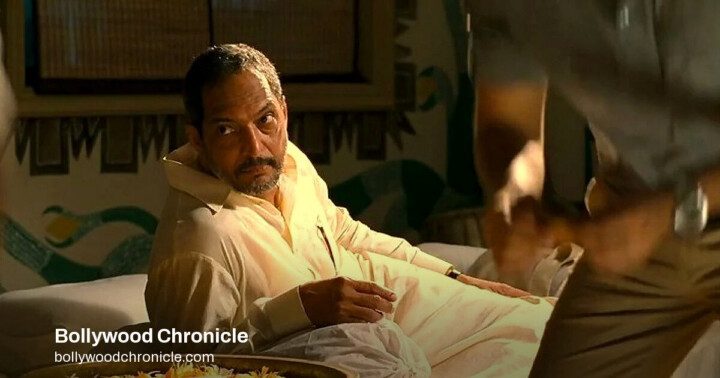
For younger viewers he was Uday Shetty in Welcome, the gangster trying to obey the instruction “Control, Uday, control.” For older audiences he was Anna in Parinda, Pratap in Krantiveer, Joseph in Khamoshi or Belwalkar in Natsamrat. His voice was famous enough to be imitated in a few syllables, but the career was wider than the sound.
From poster paint to the centre of the frame
Patekar was born Vishwanath Patekar on 1 January 1951 in Murud-Janjira, Maharashtra. Too early for a childhood without obligations, he said, as his father’s finances collapsed. At 13 he earned ₹35 a month and a meal a day; he later told Siddharth Kannan, “I started working at the age of 13. So I turned 30 very early in life.” Before acting, he worked on cinema posters, then as a commercial artist and visualiser.
Theatre pulled him away, with Vijaya Mehta among his formative influences. Smita Patil encouraged him toward films, and Gaman (1978) became his entry. The actor who had been uncertain whether cinema would have room for him found not only room but a different kind of attention. Ankush, Salaam Bombay! and Parinda made that attention impossible to ignore. Parinda brought his first National Film Award; Krantiveer and Agni Sakshi brought more, and the Padma Shri followed in 2013.
The registers he could switch
- Menace: Anna in Parinda, his first National Film Award, could turn a conversation into a threat.
- Spectacle: In Krantiveer, his Pratap confronted a crowd with blood that could not be told apart by religion, and earned the Best Actor National Award.
- Silence: Sanjay Leela Bhansali’s Khamoshi cast him as Joseph, a father who could neither hear nor speak; Patekar held the scene with hands and face.
- Comedy: Welcome gave him Uday Shetty, whose anxieties were serious to him. “One should do comedy with a straight face,” he said in 2015.
- Autumn: Mahesh Manjrekar’s Natsamrat made him Ganpatrao Belwalkar, a theatre giant who could not make ordinary life obey the stage.
The life beneath the roles
Patekar remembered what hunger did to pride. In a 2015 interview he said, “So for me there can be no fragrance better than that of a chapati.” That detail sits close to his screen fury. He also spoke with unusual candour about the death of his eldest son, Durvasa, who was born with disabilities and died at two-and-a-half, describing his early concern with how others would see him and calling the child’s short life a lesson in his own failings.
His public history includes the 2018 allegations by Tanushree Dutta concerning a 2008 shoot, which he denied. Mumbai Police filed a closure report in 2019 citing insufficient evidence; Dutta contested it. Away from the set, he co-founded NAAM Foundation with Makarand Anaspure in September 2015, working on water conservation, canal restoration and village support during Maharashtra’s drought and farm distress.
He was still working: Housefull 5, a police officer in Vishal Bhardwaj’s O’Romeo and a cameo in Subedar with Anil Kapoor. But the larger loss is that Hindi cinema has lost a performer who could make the absurd plausible and the wounded difficult to dismiss. Somewhere, someone will still imitate the voice; the quieter roles are what reward the rewatching.
Comments