

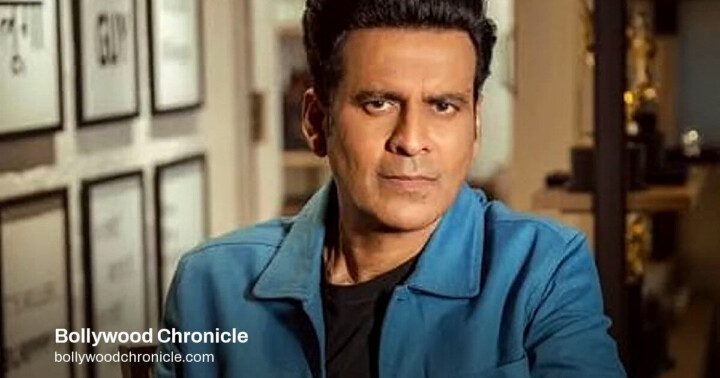
Few working actors have earned the authority to critique Hindi cinema quite like Manoj Bajpayee. Speaking to Zoom while promoting his Netflix film Gajab Raat, with co-stars Divya Dutta and Shraddha Das, he offered a blunt diagnosis: the industry has a pattern of wasting performers through stereotyping.
He said the industry carries “a bad reputation and bad karma” in its treatment of talent, because stereotyping reduces gifted actors to nothing. Many performers, he added, went away and withered without recognition.
The remarks matter because they do not come from an outsider. Bajpayee has moved from the margins to the marquee, so his critique is grounded in decades of surviving the very system he is describing.
Only a quarter of his range
Bajpayee did not exempt himself. He estimates filmmakers have used roughly a quarter of what he can do. “Only a quarter of me has been tapped,” he said. He framed the gap not as bitterness but as an artist’s hunger, and added that the hunger is still alive after all these years.
The supporting-actor ceiling
Dutta was even more direct about how the industry sorts performers. She dislikes being called a “supporting” or “character” actor. In her telling, those labels are a shortcut casting circles reach for when they do not want to understand what an actor actually brings, and the tag then becomes a ceiling.
- She has played villains in some films and leads in others.
- She carried the series Chiraiya largely on her own, to strong results.
- Performers like her, she argued, are complete actors rather than a single slot.
Bajpayee traced the habit to a deep-rooted, almost colonial attachment to hierarchy: everyone on a film is ranked as lead, character artiste or support. He said he lived through that ranking and fought private battles to get past it, but its hold is finally weakening.
Streaming as the equaliser
Both actors credit streaming for much of the change. Bajpayee said secondary roles were once routinely shortchanged, while many producers now make an effort to treat the whole cast fairly. OTT has also changed audiences, he argued. Families now watch closely, discuss characters in depth, and can spot exactly where a story falters.
He described sitting with a district magistrate’s family whose grasp of a show’s characters and flaws impressed him. He said he values that kind of living-room critique more than most professional reviews.
For Hindi cinema, the cultural shift is the real story. If casting by range replaces casting by rank, the talent that once withered away may finally get its due.
Source: Gulf News

Comments