

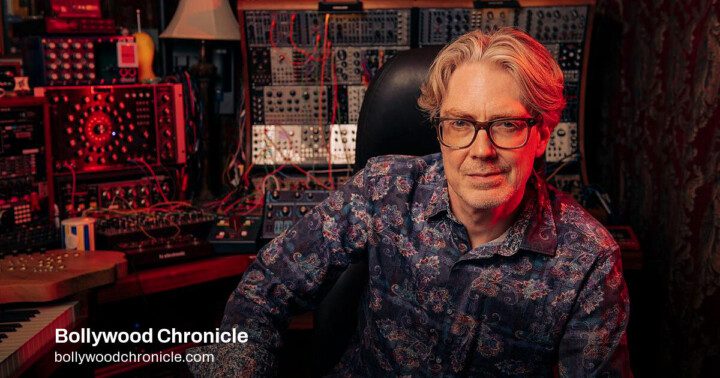
Danish composer Jesper Kyd first became known to many Indian filmgoers through a roundabout route: a track composed for Hitman: Blood Money caught the ear of Tumbbad co-director Adesh Prasad. The collaboration produced a score that still lingers eight years after the film opened on October 12, 2018.
An unlikely route into Hindi cinema
Kyd had not worked on an Indian production before. Speaking about the film’s anniversary, he recalled wanting the music to feel original rather than assembled from familiar cinematic cues — in his words, something that “oozed that world.” Directed by Rahi Anil Barve with Prasad, and starring Sohum Shah as the treasure-obsessed Vinayak Rao, Tumbbad became the first Indian film to screen in the Critics’ Week section of the Venice International Film Festival. It has since grown into a cult favourite and is routinely named among the strongest Indian horror films of this century.
Building an otherworldly texture
The score works through texture as much as theme. Dissonant strings, percussion, whispers and manipulated acoustic instruments sit beside the cymbalom, a hammered-string dulcimer closely associated with Hungary. Kyd did not play it conventionally.
- The cymbalom was scraped rather than hammered, then processed into a richer sonic texture.
- The result felt as though it could belong to India and also to an alternate universe.
- The cue “Descending,” written first for the film, used a live-recorded 14-piece Bulgarian choir.
“Descending” arrives when Vinayak finally reaches the treasure he has chased for much of his life. Kyd chose celebration over warning. The title signals what is happening — Vinayak is “descending into greed” — but the music lets the audience share his triumph before the cost becomes clear. The film, he noted, does not judge its protagonist.
Horror that is not typical horror
Kyd distinguishes between a conventional horror score built on jump scares and the fantasy horror of Tumbbad. The music had to match rain, moonlight and atmosphere, he said, and to occupy a space that was “otherworldly and wasn’t tied too firmly to anything familiar.” That instinct also guided his work on Assassin’s Creed II, where Ezio Auditore’s long arc from young nobleman to grief-tempered assassin parallels Vinayak’s journey through the film.
He connects both scores through a sense of truth rather than craft alone. Kyd said he has known moments of feeling on top of the world and then losing everything, and he drew on that when writing themes for Ezio. Tumbbad, he added, carries “a truth at the heart of the film” that he wanted the music to share.
Kyd remains wary of repeating himself. He said hearing his own music pulls him back to the difficulties of its creation, and that he would rather keep choosing new directions than settle into sequels or familiar categories. That refusal to repeat may be why Tumbbad still sounds like a world rather than a style.
Source: The Hindu



Comments