

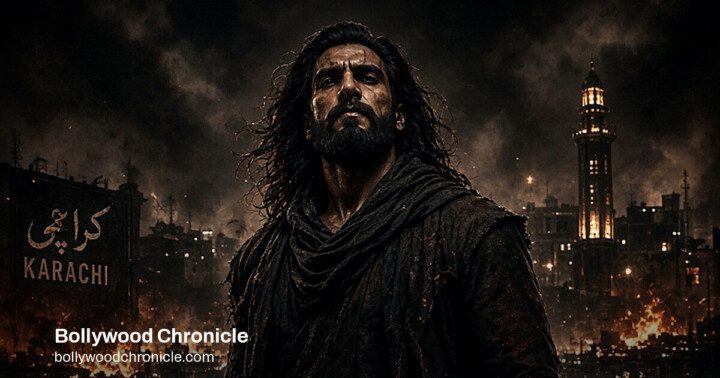
A new critical essay in Eurasia Review has placed Aditya Dhar’s Dhurandhar and Dhurandhar 2: The Revenge inside a larger argument about the kind of nationalism Hindi cinema has been manufacturing since 2014. The piece is less a review of action choreography than a reading of what the franchise makes visible—and what it leaves out.
What the essay claims
The essay argues that the films do not treat Pakistan merely as a geopolitical rival. In its reading, the conflict is presented as an ideological struggle between Islam and India, with Muslim Pakistani characters repeatedly cast as violent and dehumanised. Religious markers do much of the work: the word “kafir” recurs, Islamic verses accompany violence, while verses from the Bhagavad Gita and Sikh texts are used for justice.
Three connected claims run through the essay:
- The India-Pakistan conflict is framed as Islam versus India rather than as a contest between states.
- Muslim Pakistani characters are routinely shown as bloodthirsty, collapsing the line between a community and a terrorist.
- Sikh characters are moved from older comic or devout-soldier tropes into a Khalistani-sympathiser slot.
The post-2014 pattern
The essay places Dhurandhar within a wider film cycle that includes Padmaavat, Chhaava, Tanhaji, The Kashmir Files, The Kerala Story and Article 370. Whatever their genre, these titles are read as reinforcing a strong-state version of India—one that, in the franchise’s own dialogue quoted by the essay, declares: “Yeh Naya India hai, yeh ghar mein ghusega bhi aur marega bhi.”
That line, the essay suggests, is not just a hero’s punchline. It marks a shift from showing India as a victim of cross-border violence to celebrating a state that strikes back. The danger, as the author frames it, is that the revenge plot normalises violence and leaves little room for plural or dissenting voices within the nation.
Why the subtext matters
For readers who follow Hindi cinema as a record of its time, the essay is a reminder that box-office nationalism does not simply reflect public mood; it also trains it. When a film borrows real incidents and then alters facts for plot, the audience is asked to accept the altered version as history. That is a consequential transaction.
The essay’s concluding worry is not about one franchise but about a narrowing public imagination. If the only Indians on screen are either heroic Hindus or threatening Others, then the idea of India becomes smaller than the country itself.
Source: Eurasia Review

Comments