

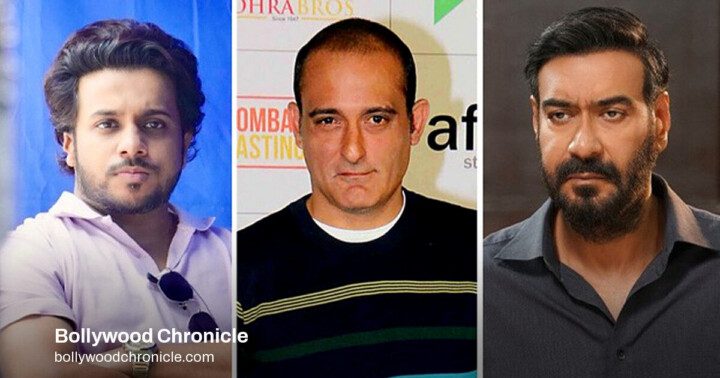
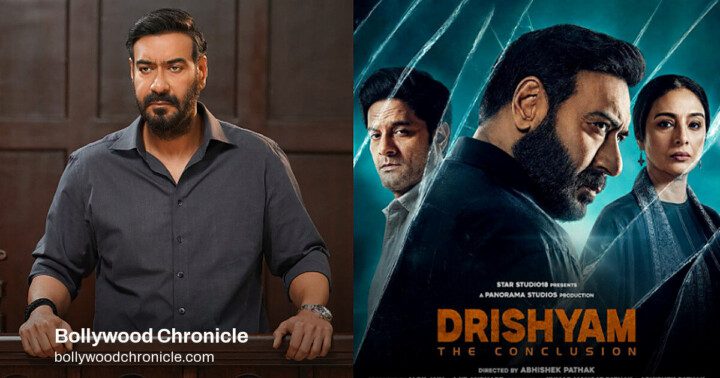
The Drishyam films run on airtight plotting, so a last-minute casting exit is exactly the kind of shock that can leave seams visible on screen. In an interview with Bollywood Hungama, writer Aamil Keeyan Khan has detailed how Drishyam The Conclusion absorbed Akshaye Khanna’s departure roughly a week before principal photography.
Khan, who shares writing credits as dialogue and screenplay writer and lyricist, said the actor walked out ‘seven or eight days’ before the scheduled start. His reaction was blunt: ‘Hum log pe bomb phoota tha!’ — ‘a bomb went off on us.’ Every department’s dates were locked, and the film suddenly needed a new character without the luxury of extra running time.
Seven days, one successor
The fix was not a silent recast. The script team introduced a new Crime Branch officer, Rajveer Singh Tomar, and gave the film an on-screen reason for the handover: IG Tarun Ahlawat was no longer handling the case, and Tomar had taken an interest in it.
- Write a successor character rather than swapping one face for another.
- Rework scenes in both the first and second halves.
- Raise the stakes without stretching the narrative.
- Deliver the whole fix inside a week.
Why the handover had to be organic
For a franchise built on causal puzzles and payoffs, unexplained recasting would have been a rare visible flaw. By acknowledging the change on screen, the film turns a production problem into story logic. Khan said the writers worked day and night to make the introduction feel organic, aware that there was no time to rebuild the plot.
Continuity is not merely cosmetic here. The Drishyam films ask viewers to treat small details as clues, so an unexplained actor change would have read as a clue the story never pays off. Writing the handover into the opening scenes protects that contract.
Calm under the schedule
Khan reserves particular credit for director-producer Abhishek Pathak. ‘Any other director would have panicked, but he remained calm,’ he said. The film could have been postponed, but Khan argues that would have been its own failure. He borrows a Hindi proverb: ‘Do haathi ki ladaai mein hamesha ghaas kuchalti hai’ — when elephants fight, it is the grass that gets trampled.
The grass, in this case, is the crew. Spot boys, lightmen and daily workers cannot absorb a months-long delay the way a lead actor or a producer can. Keeping the schedule was not just a creative fix; it was a decision about who bears risk when a production wobbles.
That is the larger lesson of the episode. Last-minute exits are common; the difference lies in whether the response treats the schedule, the story and the crew as one problem rather than three separate fires.
Source: bollywoodHungama.com

Comments