

Ramayana: Rise of a Legend has opened in cinemas worldwide from 5 November as the first half of a two-part adaptation, carrying a reported US$420 million (S$538 million) combined budget and the claim that Indian cinema can now mount a global event rather than a regional one.
The bet behind the spectacle
The production took more than a decade to reach the screen. Producer Namit Malhotra, whose VFX company DNEG has eight Academy Awards for films including Inception and Dune, calls it “the largest production in the history of Indian cinema” and positions the two-film version as India’s Star Wars or The Lord of the Rings.
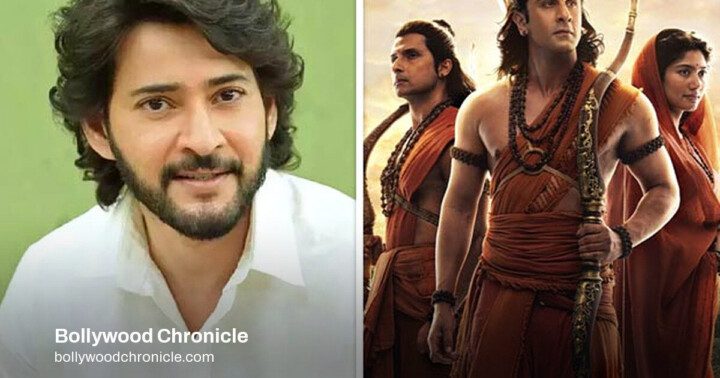
The cast is built for domestic and diaspora pull: Ranbir Kapoor plays Rama, Sai Pallavi plays Sita, and Kannada star Yash plays Ravana. The story follows Rama’s battle to rescue Sita from the demon king, now rendered with flying elephants and giant demons through heavy VFX.
Built for export, not just dubbing
The film was shot entirely in Hindi, but the makers wrote a separate English-language screenplay and recorded English dialogue with cast members and voice artists using lip-sync techniques. Hans Zimmer and A.R. Rahman composed the score; action directors and production designers bring Hollywood credits to the project; Sony Pictures is handling international distribution.
Some familiar Bollywood markers are deliberately absent. The film skips elaborate song-and-dance routines, while keeping melodrama, romance, action and a nearly three-hour runtime in the English version. Yash described the collaboration as East and West coming together “in a true sense.”
Why this release matters
Indian cinema produces about 2,000 films a year and has expanded its reach through diaspora networks and streaming platforms such as Netflix and Prime Video. Yet an Oscar in the main film categories remains elusive, and theatrical crossover has rarely matched streaming success.
The test here is whether an authentically Indian story, as Malhotra puts it, can support Hollywood-scale infrastructure. A large set was built in Mumbai, with VFX teams working in Mumbai, London and Vancouver. The English version and Sony’s distribution suggest the audience being pursued is not only the domestic market of 1.4 billion people.
- Worldwide release began 5 November; the film is the first of two parts.
- Reported combined budget: US$420 million (S$538 million).
- Hindi and English versions available; the English version runs nearly three hours.
- Produced by Prime Focus Studios and Monster Mind Creations; Sony Pictures distributes internationally.
For director Nitesh Tiwari, the editorial goal was to preserve “a certain sense of timelessness to the emotions and the values which Ramayana stands for” for audiences outside India. Whether that emotional register converts into global box office will shape how quickly the second part, and future Indian epics, are financed for export.
Source: The Straits Times

Comments