

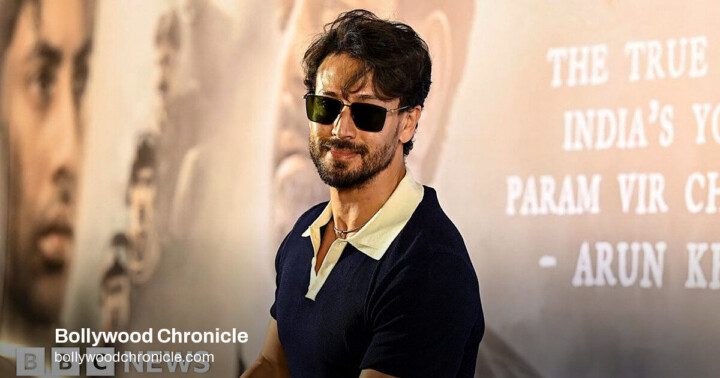
The attempt on Tiger Shroff in Juhu on Sunday evening has moved quickly from a celebrity shooting into a wider story about organised crime, social media and Hindi cinema’s memory. Shroff, 36, was leaving a football ground in his BMW when shots were fired; his driver and a vlogger who had come to film the actor were wounded.
What investigators know so far
Four days later, Mumbai police have detained or arrested 10 suspects. Investigators are tracing alleged weapon deliveries across several states and examining payments made to the alleged attackers, but they have not established who ordered the shooting or why.
Soon after the attack, a screenshot of a post purportedly made by an associate of the Lawrence Bishnoi gang circulated online, claiming responsibility. A separate audio clip, in which a man identifying himself as Anil Pandit repeats the claim, said Shroff was targeted over his alleged links to Salman Khan. Mumbai police have not verified the claims.
An old fear returns
The attack follows gunfire outside Salman Khan’s home in 2024 and outside Rohit Shetty’s house earlier this year. Together, they have revived memories of the 1990s and early 2000s, when Mumbai’s underworld financed films, demanded protection money and sometimes used violence.
- Sunday: Shots fired as Tiger Shroff leaves Juhu football ground; driver and vlogger wounded.
- Four days later: 10 suspects held, weapons traced across states, motive unconfirmed.
- 2024: Gunfire outside Salman Khan’s home; Baba Siddique was murdered six months later.
- 1990s–2000s: Underworld financing and violence era, including Gulshan Kumar’s murder in 1997.
That period was not only about coercion. Sivanandhan’s investigation into the Salman Khan-starrer Chori Chori Chupke Chupke ended with the producer and his assistant each sentenced to six years under Maharashtra’s organised crime law, and the film’s financier jailed for a year for withholding information; police seized the negatives, and the release eventually took place under court supervision.
“Not the Mumbai mafia we know”
D Sivanandhan, who took charge of Mumbai’s Crime Branch in 1998, is cautious about calling this a simple return of the past. He recalled how a call from Dubai could decide a film’s casting, financing and distribution, and how filmmakers sometimes sought underworld money. But he draws a line between those networks and the current moment.
“This is not the Mumbai mafia which we know in the last 60 years. This is something else.” — D Sivanandhan, former Mumbai Crime Branch chief
That “something else” is inseparable from Bishnoi, a jailed gangster from northern India whose name now travels through threats and claims online. He has publicly threatened Salman Khan over a 1998 blackbuck poaching case; police linked the 2024 shooting outside Khan’s home and the murder of politician Baba Siddique to his gang, though not personally to Bishnoi in Siddique’s killing.
Why the old scripts no longer apply
Bollywood once helped build the gangster’s myth. Satya (1998) and Company (2002) made feared figures into objects of fascination; Manoj Bajpayee’s Bhiku Mhatre became, in film scholar Ashvin Immanuel Devasundaram’s words, “mythologised and talismanic”. Today’s gangsters do not need cinema for that mythology: social media circulates threats, claims and staged photographs far beyond Mumbai.
Former Mumbai police commissioner Rakesh Maria has described the new generation as more technologically adept and internationally connected. The old underworld was visible and territorial; the new one is dispersed and fluid, and does not need to reside in the city to command it.
Fear, no longer control
There is little evidence so far that criminal networks have regained their former influence over Bollywood’s finances. The danger may be different: an attack does not need to control the industry to unsettle it. After the shooting, police reportedly stepped up security outside the homes of Salman Khan and Rohit Shetty, and the All Indian Cine Workers Association asked, “Today it is Tiger Shroff. Who is next?”
Sivanandhan, who spent years confronting Mumbai’s gangsters, offered a sober coda: “There is always a crack in the armour.”
Source: BBC News



Comments