

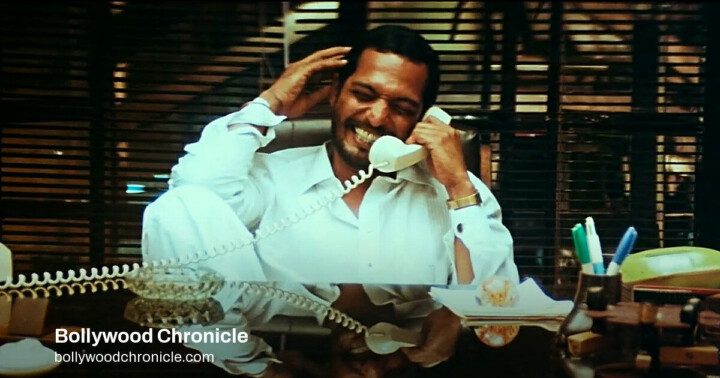
Nana Patekar, who died on Thursday, belongs to that rare group of Hindi cinema actors whose career is best understood in pairs. He could be the cold-eyed crime lord of Parinda and the gentle deaf-and-mute father of Khamoshi without either turn feeling like a detour. That range, repeated year after year from his breakout in Salaam Bombay in 1988 onward, is the real secret of his legacy.
A leading man outside the template
Before Patekar, Hindi film stardom leaned heavily on conventional charm. Patekar carved out a different route. He did not soften his angular face, his rasp, or his anger for the camera. Instead, he made those qualities the centre of a bankable screen presence, proving that audiences would pay to watch an actor who brought theatre’s rawness into the cinema. His run through Ankush (1986), Parinda (1989) and Krantiveer (1994) gave Hindi cinema a new vocabulary for male anger: not heroism first, but disillusionment, cynicism and consequence.
The performances to revisit
If his most quoted work is the firelit terror of Anna in Parinda, the quieter turns are just as important. This list is a useful entry point rather than a ranking:
- Krantiveer (1994) — Pratap’s climactic monologue about a complacent nation still circulates on social media.
- Khamoshi (1996) — Joseph shows his command of silence and small gesture, a long way from Anna.
- Ab Tak Chhappan (2004) — Sadhu Agashe’s clinical blank stare turns an encounter specialist’s detachment into a question about death.
- Natsamrat (2016) — Appa brings his theatre roots full circle, an actor who gave everything to the stage and lost life outside it.
For the unsung side of the title, the lighter Thodasa Roomani Ho Jayen (1990) and the obsessive stage actor of Wajood (1998) reward a second look, while the brief role of Bhau in Hu Tu Tu (1999) shows how much he could do with a small canvas.
Why the dichotomy matters
The phrase celebrated and underrated fits because Patekar’s fame rests on a handful of showpiece scenes, yet the full filmography keeps revealing unexamined choices. He directed Prahaar: The Final Attack (1991) at the peak of his fame, choosing a soldier’s grief over easy victory. He moved between wordy rage and silent grief, between villain and victim, without losing the thread. For actors who do not fit the traditional mould, his career remains the strongest available counterexample: stardom does not have to mean sameness.
For those building a retrospective, the useful method is to watch in pairs — Krantiveer with Khamoshi, Parinda with Natsamrat — and notice how the same intensity changes temperature.
Source: The New Indian Express


Comments